
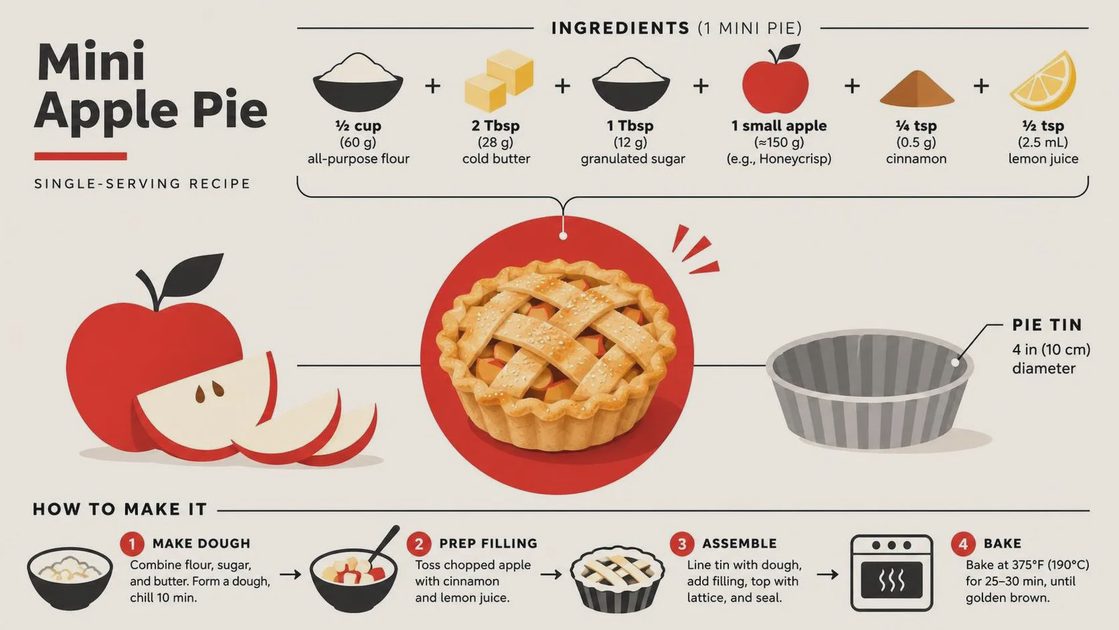
A mini apple pie is just the right size when you want a cozy dessert without a full pie sitting on the counter for days. This recipe makes four little pies in a standard muffin pan, with tender cinnamon apples tucked inside buttery pastry. Use refrigerated pie dough to keep things simple, or make the small batch of dough below. Either way, give the pies time to cool so the filling can settle before you lift them out.
What you’ll need
For the pastry, gather 3/4 cup (90 grams) all-purpose flour, 1/4 teaspoon salt, 5 tablespoons (70 grams) cold unsalted butter, and 2 to 3 tablespoons ice water. You’ll also need a little extra flour for rolling.
For the filling, use 1 medium firm apple, peeled and cut into small dice; 2 tablespoons brown sugar; 1 teaspoon cornstarch; 1/2 teaspoon ground cinnamon; a pinch of salt; and 1 teaspoon lemon juice. Aim for about 1 cup of diced apple. A small splash of milk and a pinch of coarse sugar are optional for finishing.
This mini apple pie recipe works well with a firm, flavorful apple such as Granny Smith, Honeycrisp, or Pink Lady. A tart apple gives the filling a brighter edge; a sweeter one makes a gentler, rounder filling. Dice the fruit about 1/4 inch across so it softens before the little crusts get too dark.
You’ll need a standard 12-cup muffin pan, though you’ll fill only four cups, plus a rolling pin and a round cutter or drinking glass about 4 inches across. A baking sheet underneath the pan catches any drips.
Make the pastry and filling
Stir the flour and salt together in a bowl. Cut the cold butter into small cubes, then work it into the flour with your fingertips or a pastry cutter. Stop when the mixture has a sandy look with some pea-size pieces of butter still visible. Those little pieces help create flaky layers.
Sprinkle in 2 tablespoons of ice water and toss with a fork. Squeeze a handful: if it holds together, you have enough water. If it crumbles apart, add more water a teaspoon at a time. Press the dough into a disk, wrap it, and chill for at least 30 minutes. If it has chilled until very firm, let it sit on the counter briefly before rolling.
While the dough chills, mix the diced apple with the brown sugar, cornstarch, cinnamon, salt, and lemon juice. Set it aside while you roll. The cornstarch helps thicken the juices, but it won’t turn the filling into a stiff gel, especially while the pies are hot.
To make a mini apple pie with store-bought pastry, start with one refrigerated pie crust and let it soften according to the package directions. You may have dough left over. Wrap the scraps and refrigerate them, or sprinkle them with cinnamon sugar and bake them separately until golden.
Shape and bake
Heat the oven to 400°F. Lightly grease four muffin cups. On a lightly floured counter, roll the chilled dough to about 1/8 inch thick. Cut four rounds roughly 4 inches across, gently rerolling the scraps if needed. Press each round into a muffin cup, easing it into the corners without stretching. The pastry should reach near the top of each cup; a little unevenness is fine.
Divide the apple mixture among the cups, including any juices left in the bowl. Mound it slightly rather than packing it down hard. If there is more filling than the cups can comfortably hold, save the extra for oatmeal or yogurt instead of forcing it in.
Gather the remaining dough and cut thin strips or small shapes for the tops. Lay a few strips across each pie or add a small cutout, leaving gaps for steam. Brush exposed pastry lightly with milk and sprinkle with coarse sugar, if you like. An open top is fine too; the apples may brown a little more at the edges.

Place the muffin pan on a baking sheet and bake for 25 to 35 minutes, until the crust is deep golden and the filling is bubbling. If the tops brown before the apples are tender, lay a loose piece of foil over the pan and continue baking. A small knife should slide into the fruit without much resistance.
Let the pies cool in the pan for at least 20 minutes. Run a thin knife around the edges, then lift them out carefully. For the neatest mini apple pie, let it cool longer on a rack; warm filling is delicious but more likely to spill. Serve just warm or at room temperature, with vanilla ice cream if that sounds good to you.
A few helpful fixes
If the pastry cracks as you roll it, it may be too cold. Give it a few minutes on the counter, then press the cracks together and continue. If it sticks, dust the counter and rolling pin lightly with flour, lifting and turning the dough as you go. Too much flour can make the pastry tough, so use just enough to keep it moving.
A pale bottom can happen when the pies are taken out before the pastry has finished baking. Look for color around the edges and bubbling filling, not just a browned decoration on top. A metal muffin pan is a helpful choice because it transfers heat efficiently. Set the pan on the oven’s middle rack unless your oven tends to brown strongly on the bottom.
If a mini apple pie sticks in its cup, let it cool a little longer before trying again. A thin knife can loosen baked-on filling, but work gently so the crust stays together. Even a broken pie tastes lovely spooned into a bowl.
Storage and making ahead
You can make the dough a day ahead and keep it wrapped in the refrigerator. Dice and season the apples shortly before filling the shells so they don’t sit in their juices for hours. You can also assemble the pies while the oven heats, then bake them straight away.
Store cooled pies covered at room temperature for up to two days, or refrigerate for up to four days. Rewarm in a 325°F oven until heated through; a microwave is quicker but softens the crust. For a small batch, I like to warm only the pies I plan to serve and leave the rest covered until needed.



No notes yet — write the first one.