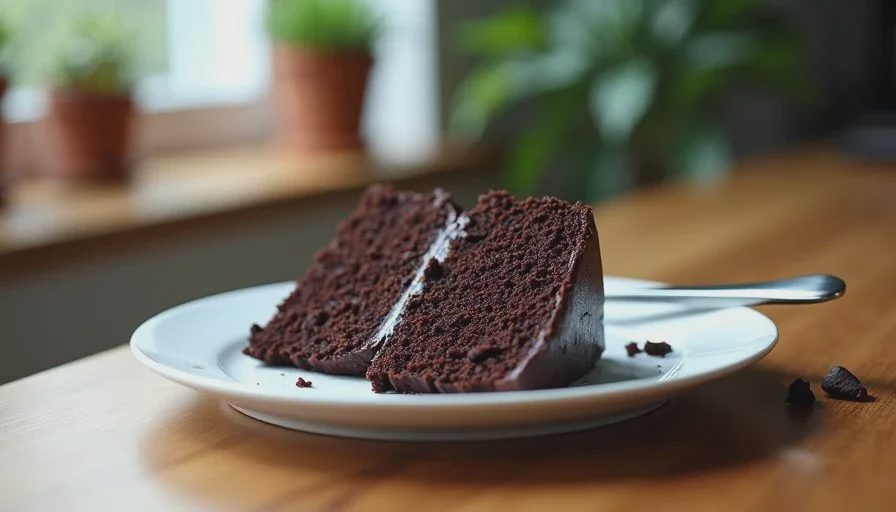
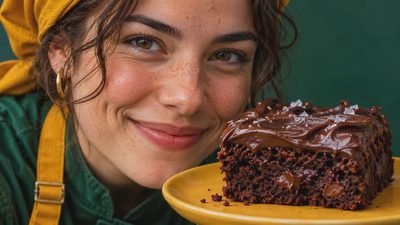
A small batch chocolate cake sized for two can still feel like a celebration. The key is keeping the proportions that produce a moist crumb and deep chocolate flavor while reducing the total yield so the finished cake matches the number of people who will actually eat it. Full-size recipes often produce more cake than a couple or small household needs, which leads to days of leftovers or the quiet decision to freeze half the layers. Scaling with intention removes that friction without sacrificing the result.
I first started adapting chocolate cakes downward after leaving professional pastry kitchens. In a bakery setting a full batch made sense for display cases and daily service. At home in Eugene, with one eight-year-old and a preference for eating dessert while it was still at its peak, the same formulas created excess. A standard two-layer cake sat in the refrigerator longer than it stayed at its best. The solution was not to stop baking cake. It was to write a version that produced enough for two generous servings, or four smaller ones, with a process that fit an ordinary afternoon.
This cake uses everyday pantry ingredients, a single small pan, and mixing methods that do not require a stand mixer. The crumb stays tender, the chocolate flavor stays clear, and the finished cake can be eaten the same day or the next morning without creating a week of leftovers. The goal is a dessert that feels complete rather than scaled-down.
Why Scale Matters for Chocolate Cake
Chocolate cake is sensitive to ratios. The balance of flour, sugar, fat, cocoa, and liquid determines whether the crumb is tender or dry, whether the flavor is deep or muted, and whether the cake rises evenly. Simply cutting a large recipe in half can work if the original formula is well balanced, but it is more reliable to design the small batch from the start around a pan size and a target yield.
A full-size cake often assumes a 9-inch round pan or a larger rectangular pan and produces enough for eight to twelve servings. In a household of two, that volume creates storage questions and quality loss over subsequent days. Chocolate cake, in particular, can dry at the edges or absorb refrigerator odors if it sits too long. A small batch removes those concerns by matching the output to the people who will eat it.
Equipment also changes with scale. A small cake can be baked in a 6-inch round pan, a small loaf pan, or even a well-seasoned 8-inch skillet. Mixing can be done by hand in a medium bowl. There is no need for multiple layers, elaborate frosting quantities, or a full afternoon of production. The process stays short enough to fit between other tasks.
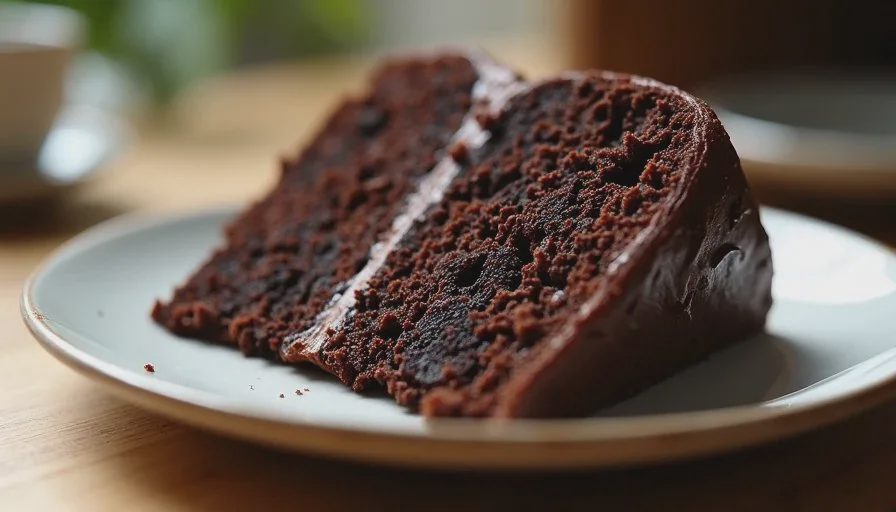
The result still carries the sensory markers of a good chocolate cake: a moist, even crumb, a clear cocoa flavor that is neither bitter nor overly sweet, and a texture that holds together when sliced. The difference is that the cake is finished while it is still at its best.
Core Ingredients and Why They Matter at Small Scale
The ingredient list stays short and familiar. The amounts are calibrated so that each component contributes without excess.
All-purpose flour provides structure without the need for cake flour in most home kitchens. At this scale the difference is modest, and all-purpose is what most bakers already have. Measuring by weight is more consistent than volume, but careful spoon-and-level volume measuring works if a scale is not available.
Cocoa powder is the primary flavor source. Natural cocoa produces a classic, slightly brighter chocolate note. Dutch-process can be used if that is what is on hand; the main adjustment is to ensure the leavening matches the cocoa’s acidity. Either way, sifting the cocoa with the dry ingredients prevents lumps that are harder to break up in a small volume of batter.
Sugar does more than sweeten. It contributes to tenderness and moisture retention. In a small cake the balance is important because there is less total batter to buffer small measuring errors. Granulated sugar is reliable and dissolves readily when the wet and dry ingredients are combined thoroughly.
Fat carries flavor and keeps the crumb soft. Melted butter or a neutral oil both work. Butter adds a subtle dairy note; oil tends to produce a slightly moister crumb that holds up well overnight. The choice depends on what is available and the texture preference. At small scale the difference is noticeable but not dramatic.
Eggs provide structure and emulsification. One large egg is usually sufficient for a cake sized for two to four servings. The egg should be at room temperature so it incorporates evenly into the small volume of batter.
Liquid—buttermilk, milk with a splash of vinegar or lemon, or coffee—activates the cocoa and contributes moisture. Coffee deepens the chocolate flavor without making the cake taste like coffee. Buttermilk adds a slight tang that balances sweetness. Either works; the key is using enough liquid so the batter is pourable but not thin.
Leavening is modest. Baking soda or baking powder, matched to the cocoa and any acidic liquid, gives the cake its rise. Because the volume is small, it is easy to over-leaven, which can create a coarse crumb or a cake that rises and then collapses. Measuring carefully and mixing just until combined keeps the structure even.
These ingredients are ordinary. The reliability comes from keeping the ratios consistent and observing the batter’s consistency rather than relying only on timing.
Mixing Method That Works Without a Stand Mixer
Hand mixing is practical and often preferable at this scale. A medium bowl, a whisk or flexible spatula, and a few minutes of attention are enough.
Start by whisking the dry ingredients together thoroughly. This distributes the cocoa, sugar, and leavening so that no pockets remain. Sifting is helpful if the cocoa is lumpy, but a thorough whisking in the bowl is usually sufficient.
In a separate bowl or large measuring cup, combine the wet ingredients: melted butter or oil, egg, liquid, and any vanilla. The mixture should look uniform before it meets the dry ingredients.
Pour the wet into the dry and stir gently until no dry streaks remain. The batter will be thicker than a typical box-mix consistency but still pourable. Over-mixing develops gluten and can toughen the crumb, so stop as soon as the ingredients are incorporated. A few small lumps are preferable to a smooth but overworked batter.
If the batter seems unusually stiff, a tablespoon of additional liquid can be added. If it seems thin, a small spoonful of flour can adjust it. These micro-adjustments are easier to make accurately when the total volume is small.
The entire mixing process takes only a few minutes. There is no need for creaming stages or multiple additions. The simplicity is one of the practical advantages of the small batch.
Pan Choice, Baking, and Doneness Cues
A 6-inch round cake pan is a reliable choice for a cake that yields two generous slices or four smaller ones. An 8-inch square pan or a small loaf pan can also work if the batter is spread evenly and the baking time is adjusted. Grease the pan well and, if desired, line the bottom with a parchment circle for clean release.
The oven should be fully preheated. A temperature of 350°F is standard for most chocolate cakes. Because the cake is small, it will bake faster than a full-size version. Begin checking several minutes earlier than a larger recipe would suggest.
Visual and tactile cues are more useful than the clock alone. The cake is done when the top springs back lightly when touched near the center, a toothpick or thin skewer inserted in the middle comes out with a few moist crumbs (not wet batter), and the edges have begun to pull slightly away from the pan. Over-baking dries the crumb quickly in a small cake, so it is better to err on the side of slightly under rather than over.
Cool the cake in the pan for about ten minutes, then turn it out onto a rack. A small cake cools relatively quickly. Once it is no longer warm to the touch it can be frosted, dusted with powdered sugar, or simply sliced and served.
Simple Finishes That Keep the Focus on the Cake
A small chocolate cake does not need elaborate decoration. The goal is a finish that complements the crumb without adding unnecessary steps or leftover frosting.
A light dusting of powdered sugar is often enough. It requires no extra bowls and can be done just before serving. A thin glaze made from powdered sugar, a spoonful of cocoa, and a little milk or coffee adds a bit of shine and extra chocolate note without the bulk of a buttercream.
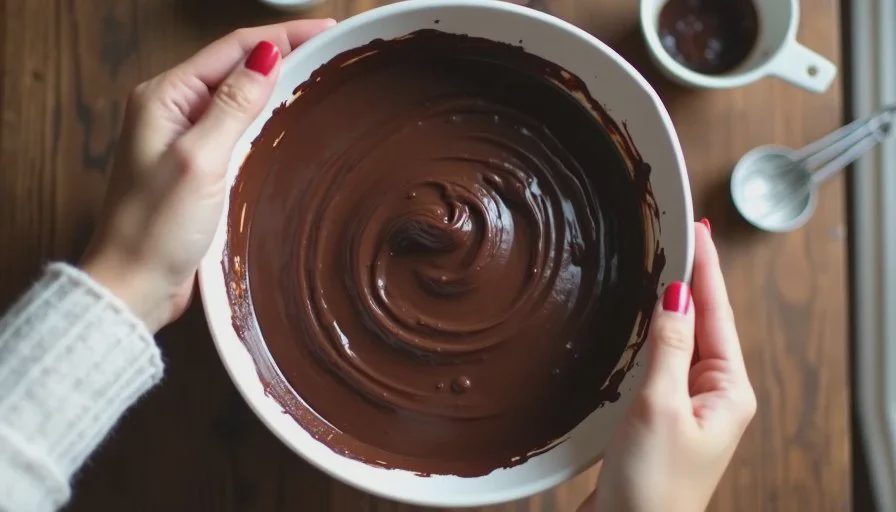
If a frosting is preferred, a small batch of chocolate buttercream or a simple ganache can be made in the same bowl used for the batter. The quantities stay modest so that the frosting matches the cake rather than overwhelming it. Any remaining frosting can be refrigerated for another small bake or discarded without significant waste.
Fresh berries, a spoonful of lightly sweetened whipped cream, or a scoop of ice cream turn the cake into a plated dessert without requiring additional baking. These additions keep the focus on the cake itself while making the serving feel complete.
The principle is the same as the rest of the process: enough to feel special, not so much that the dessert becomes a project of its own.
What I Watch for in Test Bakes
Every small cake I make gets a few notes on the recipe card. The points that matter most are consistency of the batter, height of the rise, texture of the crumb, and how the cake holds overnight if any remains.
If the batter looks thicker or thinner than usual, I note the flour brand and the exact liquid amount. Different flours absorb differently, and a small batch shows those differences quickly. Adjusting by a teaspoon or two the next time usually brings the consistency back.
If the cake domes excessively or sinks slightly in the center, the leavening or oven temperature is the first place to look. An oven thermometer is useful because home ovens often run hotter or cooler than the dial indicates. At small scale the effect of a twenty-degree difference appears faster.
The crumb should be moist and even, with a fine to medium texture. A dry or crumbly result usually points to over-baking or too much flour. A gummy or dense result can come from under-baking or too much liquid. These are ordinary adjustments, not signs that the recipe is unreliable.
Flavor is checked both warm and at room temperature. Chocolate notes can taste different as the cake cools. A cake that seems slightly mild when warm often tastes more balanced once it has rested.
These observations keep the process honest. The notes are short. The goal is simply to make the next bake a little more predictable.
Common Points of Friction and Practical Fixes
A few predictable issues appear when bakers first try small chocolate cakes.
The cake can dry out faster than a large one because there is less mass to retain moisture. The solution is to bake only until the center tests done, cool it properly, and store any leftovers tightly covered at room temperature for a day or in the refrigerator if the kitchen is warm. A light brush of simple syrup on the cut surfaces can help if the cake will be held longer, though most small cakes are finished quickly enough that this is unnecessary.
Measuring errors are more noticeable at small scale. A slightly heavy hand with flour or cocoa can produce a denser crumb. Using a scale removes most of that variability. If measuring by volume, spoon the flour into the cup and level it rather than scooping directly from the bag.
Pan color and material affect baking time. Dark pans brown the exterior faster. In that case, checking earlier or reducing the temperature by 25°F can prevent over-browning while the center finishes. Light-colored aluminum pans tend to bake more evenly for small cakes.
Over-mixing is easy to do when the volume is small and the temptation is to keep stirring until the batter looks perfectly smooth. Stopping as soon as the dry ingredients disappear is the more reliable approach. The few remaining small lumps will usually disappear during baking.
None of these adjustments require special skill. They simply match the process to the size of the cake and the conditions of a home oven.
When This Cake Makes Sense
This small chocolate cake is useful on ordinary days when a full dessert feels like too much and no dessert feels incomplete. It works for a weeknight after dinner, a quiet weekend afternoon, or a small celebration that does not need a large production. The process fits into an hour or so of active and baking time. The result is a complete dessert rather than a partial one.
It is also a practical way to use up a small amount of buttermilk, an open box of cocoa, or the last of a bag of chocolate chips if a simple mix-in is desired. The formula is flexible enough to accept minor variations without losing its structure.
I still bake larger cakes when the occasion calls for them. The difference is that the everyday chocolate cake stays at a scale that matches the household. The crumb is still tender. The flavor is still clear. The cake is simply finished while it is still excellent, and the kitchen is left without a surplus that has to be managed.
That is the practical advantage of designing the dessert for the people who will actually eat it. The celebration stays in the cake itself rather than in the size of the pan.
Small batch, real life, something worth sharing.


No notes yet — write the first one.