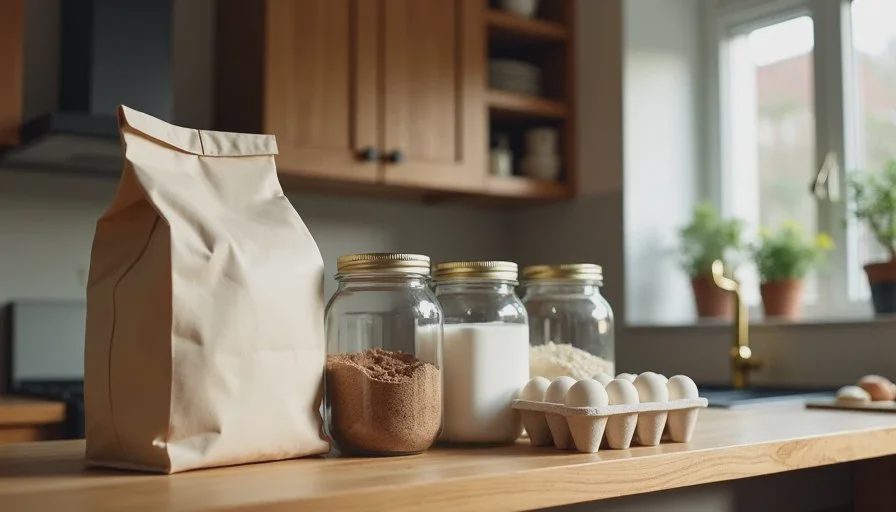
A small-batch baker’s pantry does not need to be large or exotic. It needs to be intentional. The goal is a short list of reliable ingredients that can produce breads, cakes, and simple desserts without repeated trips to the store or a cupboard full of half-used specialty items. When the core staples are present and fresh, most small recipes can be mixed from what is already on the shelf.
I learned this preference for restraint after years of professional kitchens that stocked dozens of flours, chocolates, and inclusions. At home the volume of baking is lower and the storage space is limited. Keeping only what is used regularly reduces waste, keeps ingredients within their best quality window, and makes it easier to decide what to bake on an ordinary day. The list that follows is built around that reality: ingredients that appear in many small-batch formulas, that store reasonably well, and that can be found at a regular American grocery store.
This is not a minimalist challenge. It is a practical inventory that supports the kind of baking most home cooks actually do—one loaf, a few rolls, a small cake, or a single-pan dessert—without requiring a separate shopping trip for every recipe.
Core Dry Ingredients That Carry Most Recipes
A few dry staples form the foundation of nearly every small-batch bake.
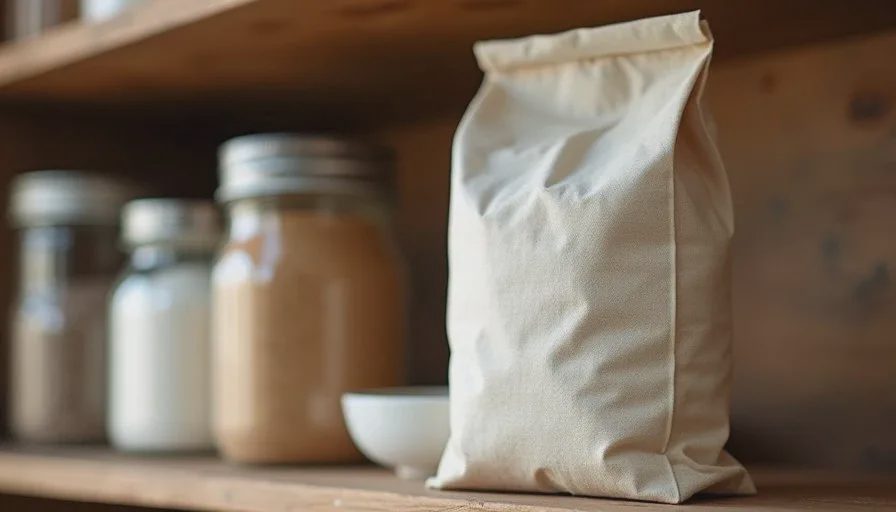
All-purpose flour is the single most useful item. It performs well in cakes, quick breads, cookies, biscuits, and many enriched yeast doughs. Higher-protein bread flour is worth keeping if sourdough or chewier loaves are baked regularly, but all-purpose covers the majority of home baking. Buying a moderate bag and rotating it prevents the flour from sitting long enough to lose freshness or pick up off flavors. Storing it in an airtight container helps maintain quality.
Granulated sugar is the default sweetener for most cakes, cookies, and many breads. It dissolves readily, contributes to tenderness, and browns predictably. Light brown sugar adds moisture and a mild caramel note that works well in cookies, quick breads, and some cakes. Keeping both on hand covers nearly every common formula. Dark brown sugar can be substituted in a pinch by adding a little molasses to light brown, but it is not essential for most small batches.
Cocoa powder earns its place if chocolate cakes, brownies, or chocolate cookies appear with any frequency. Natural cocoa is versatile and widely available. Dutch-process can be kept if preferred for its smoother flavor, but one type is usually sufficient. A small container stays fresher than a large one that sits for months.
Salt is easy to overlook yet essential for flavor balance. Fine sea salt or kosher salt both work; the important point is consistency so that measurements remain predictable. A small box or jar is enough.
Baking powder and baking soda are the chemical leaveners that make most small cakes and quick breads rise. They lose potency over time, so buying modest sizes and replacing them every six to twelve months keeps results reliable. Testing a small amount in hot water (for baking powder) or vinegar (for baking soda) confirms activity if there is any doubt.
These dry ingredients occupy limited shelf space and appear in the majority of recipes. Keeping them fresh and measured accurately removes a large source of variability in small batches.
Fats and Liquids That Shape Texture
Fat and liquid determine much of the tenderness and moisture in the finished crumb.
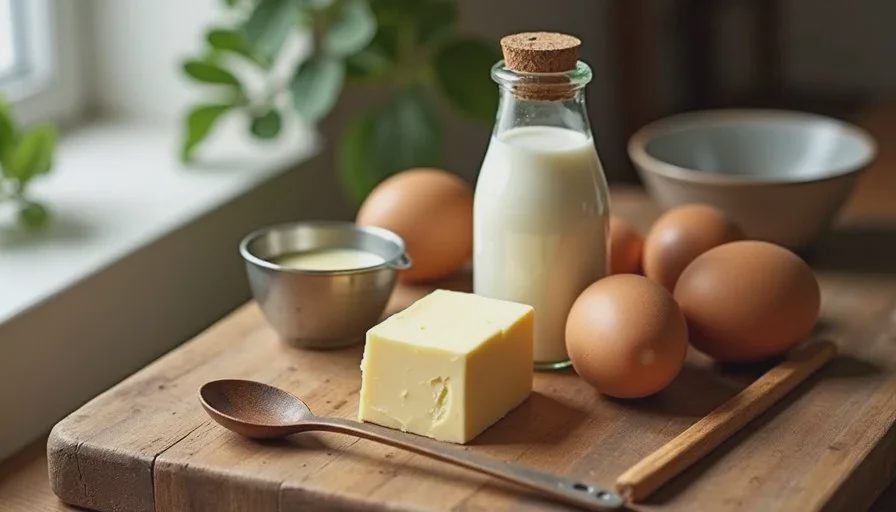
Unsalted butter is the most flexible fat for small-batch baking. It contributes flavor and structure in cakes, cookies, and enriched doughs. Keeping one or two sticks in the refrigerator and a small amount in the freezer covers most needs without the risk of the butter picking up other flavors. Salted butter can be used if that is what is on hand; the salt in the recipe can be reduced slightly to compensate.
A neutral oil such as canola or vegetable oil is useful for cakes and quick breads that benefit from a moist crumb that stays soft over a day or two. Oil is shelf-stable and requires no softening, which makes it convenient for spontaneous baking. Olive oil can work in certain savory or Mediterranean-style bakes, but a neutral oil is more versatile for sweet recipes.
Eggs are both structure and moisture. A small carton kept in the refrigerator is usually sufficient. Room-temperature eggs incorporate more evenly into batters, so taking one or two out ahead of mixing is a simple habit that improves consistency.
Milk, buttermilk, or a combination covers most liquid needs. Whole milk is reliable. Buttermilk adds tenderness and a slight tang that benefits biscuits, some cakes, and certain quick breads. If buttermilk is not used often, a small carton or the powdered version can reduce waste. In a pinch, milk with a teaspoon of vinegar or lemon juice can approximate buttermilk for many recipes.
Water and coffee round out the liquids. Coffee deepens chocolate flavor without adding coffee taste when used in modest amounts. Keeping a small amount of instant espresso or leftover coffee in the refrigerator is enough for the occasional chocolate cake.
These items are ordinary. Their value lies in being present and in good condition when a small recipe is started.
Flavor Builders Worth the Shelf Space
A short list of flavor ingredients expands what can be made without cluttering the pantry.
Vanilla extract is the most frequently used. Pure vanilla is preferable for flavor, though a good imitation is acceptable if budget or availability is a concern. A small bottle lasts a long time at home scale.
Chocolate—chips, chunks, or a bar that can be chopped—supports cookies, small cakes, and simple desserts. Semi-sweet or bittersweet covers most needs. Keeping a modest quantity prevents the chocolate from blooming or drying out.
Spices should be limited to those actually used. Cinnamon is the clear priority for most home bakers. Nutmeg, ginger, or cardamom can be added if they appear regularly in favored recipes. Whole spices ground as needed stay fresher than large jars of pre-ground spices that sit for years.
Yeast—instant or active dry—is necessary for enriched breads and rolls. A small jar or packet supply is enough. Storing it in the refrigerator or freezer extends its life. Checking the expiration date and proofing a little in warm water if there is any doubt prevents failed doughs.
These flavor elements are secondary to the core staples, yet they make the difference between a plain bake and one that feels complete. The principle remains the same: keep what is used, in quantities that match the baking frequency.
How to Keep the Pantry Practical
An essential pantry stays useful only if it is maintained.
Buy in sizes that match actual use. A five-pound bag of flour may be economical, but only if it will be finished while still fresh. Smaller bags or transferring flour to airtight containers helps. The same logic applies to sugar, cocoa, and leaveners.
Label and date items that do not already show clear dates. Flour, leaveners, and nuts benefit from a quick note of when they were opened. This simple habit prevents the quiet disappointment of using an ingredient that has lost potency or freshness.
Store according to the ingredient. Flour and sugar prefer cool, dry, airtight conditions. Butter and eggs belong in the refrigerator. Nuts, if kept, stay fresher in the freezer. Yeast prefers the refrigerator or freezer after opening.
Resist the urge to stock every specialty item that appears in an interesting recipe. A single small-batch bake that requires an unusual flour or extract can often be adapted to what is already present, or the special ingredient can be bought in the smallest available size for that one use. The pantry remains clearer, and the regular ingredients stay at the center of most baking.
Rotate stock so that older items are used first. This is especially important for leaveners and whole-grain flours, which decline in quality more noticeably than white flour or sugar.
These habits take little time and prevent the common problem of a cupboard full of ingredients that are no longer at their best.
What Can Usually Be Skipped
Many baking recipes list ingredients that are nice but not essential for most small-batch work.
Cake flour can be approximated with all-purpose flour plus a little cornstarch if a particularly delicate crumb is desired. Specialty flours such as pastry flour or multiple whole-grain varieties are useful for specific projects but rarely needed for everyday baking.
Multiple types of chocolate, extracts, and decorative sugars add variety yet also add clutter. One reliable chocolate and one vanilla extract cover the majority of needs. Decorative elements can be bought for special occasions rather than kept permanently.
Large quantities of nuts, dried fruit, or mix-ins are better purchased when a specific recipe calls for them, unless they are used weekly. They occupy space and can become rancid or hard if stored too long.
Expensive or hard-to-find ingredients are worth acquiring for deliberate projects, not for the standing pantry. The everyday list should remain ordinary and accessible.
Editing the pantry is as useful as stocking it. Removing what is no longer used creates space and makes the remaining ingredients easier to see and reach.
Building Recipes from What Is Already There
The practical test of an essential pantry is whether it supports spontaneous baking. When flour, sugar, butter, eggs, and a leavener are present, a small cake, a batch of biscuits, or a simple cookie dough can be mixed without a shopping list. Adding cocoa, vanilla, or chocolate expands the options further.
Many of the recipes on this site are written with that constraint in mind. They assume a regular grocery store and a modest set of staples. Substitutions are noted where they make sense, so that a missing ingredient does not stop the bake.
Keeping a short written list of current pantry staples on the inside of a cupboard door or in a notes app makes it easier to notice when something is running low. Replacing items before they are completely gone prevents the frustration of starting a recipe only to discover a key ingredient is missing.
The pantry is not static. It shifts slightly with seasons and with the kinds of baking that are happening most often. The core remains stable: flour, sugar, fat, eggs, leaveners, and a few flavor builders. Everything else is optional and can be added or removed according to actual use.
Why This Approach Supports Small-Batch Baking
Small-batch baking already reduces the quantity of ingredients needed for any single recipe. An essential pantry extends that efficiency across time. Instead of buying for one large project and then storing the excess, the baker keeps a steady, modest supply that matches the rhythm of regular small bakes.
The result is less waste, fewer emergency store runs, and a clearer sense of what can be made on any given day. The baking stays connected to the rest of ordinary life rather than requiring special preparation. Ingredients stay fresher because they turn over more regularly. The process of deciding what to bake becomes simpler because the options are visible and limited to what is already on hand.
This is the practical foundation that lets small-batch recipes work consistently. The techniques and ratios matter, yet they can only deliver their intended results when the ingredients themselves are present and in good condition. A focused pantry makes that condition the default rather than the exception.
Small batch, real life, something worth sharing.



No notes yet — write the first one.