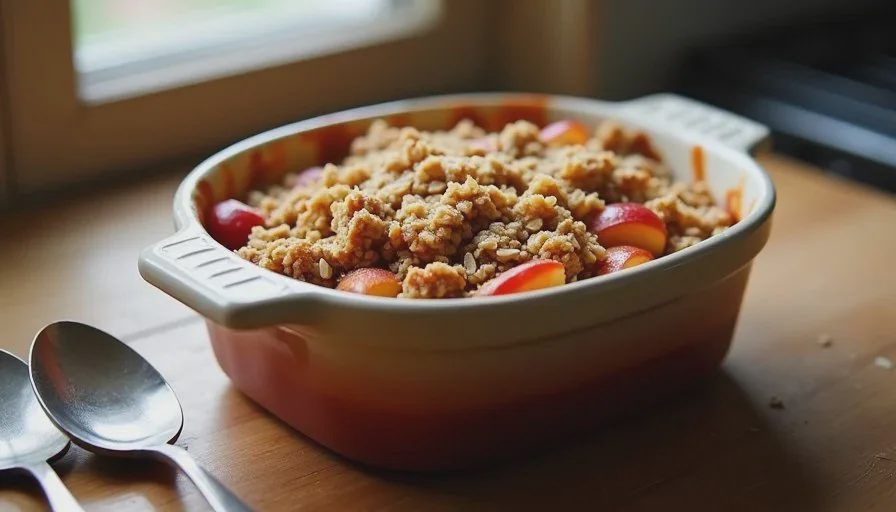
A one-apple crisp is one of the most practical desserts a small household can make. It requires no special shopping, produces no significant leftovers, and delivers the warm, spiced, buttery contrast of fruit and topping that makes a crisp satisfying. Full-size crisps often call for six or eight apples and fill a large baking dish, leaving a couple or small family with days of leftovers that slowly lose their texture. Scaling to a single apple keeps the dessert aligned with the people who will eat it and the time available on an ordinary night.
I began making crisps this way after realizing how often a standard recipe created more dessert than we would finish while it was still at its best. An apple crisp is at its peak when the topping is still crisp and the fruit is warm and just softened. After a night in the refrigerator the topping softens and the fruit continues to release liquid. A version sized for two removes that problem. The entire dessert can be finished the same evening or the next morning without waste or quality loss.
This method uses ingredients most kitchens already contain: one apple, a small amount of flour, oats, sugar, butter, and basic spices. The process is short enough to start after dinner and still have dessert ready before the evening is over. No mixer is required. No special pan is required beyond a small baking dish or even an oven-safe skillet.
Why One Apple Works
A single medium-to-large apple yields enough fruit for two generous servings when it is cut into even pieces and paired with a modest amount of topping. The fruit cooks down slightly, releasing juice that thickens with a little starch and creates a cohesive base. The topping covers the surface without overwhelming the apple or creating a dry, heavy layer.
Larger recipes assume a crowd or a desire for leftovers. In a household of two, those assumptions lead to excess. One apple eliminates the excess while still producing a dessert that feels complete. The baking time is shorter than a full-size crisp, which means the topping is less likely to over-brown before the fruit is done. The small volume also makes it easier to judge doneness by sight and smell rather than by a fixed timer.
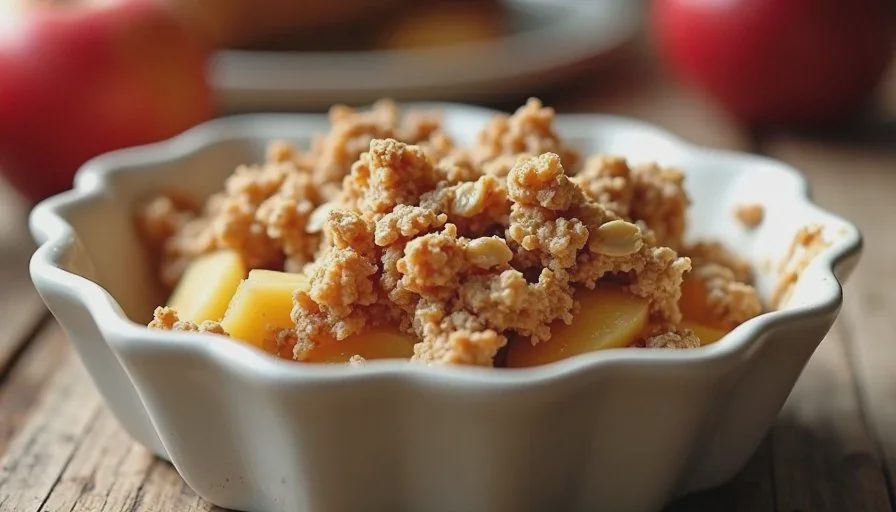
The approach is flexible. A tart apple such as Granny Smith gives brightness and holds its shape. A sweeter apple such as Honeycrisp or Fuji produces a softer, milder result. A mix of the two is possible if more than one apple is on hand, but a single apple is sufficient. The recipe does not require peeling if the skin is thin and the texture is acceptable; peeling is preferred if a smoother fruit layer is desired.
Core Ingredients and Simple Ratios
The ingredient list stays short and ordinary.
One medium-to-large apple is the foundation. It should be firm enough to hold its shape during baking. Soft or mealy apples turn to sauce too quickly and can make the dessert watery.
A small amount of sugar sweetens the fruit and helps it release juice. Brown sugar adds a mild caramel note; granulated sugar keeps the flavor cleaner. Either works. The quantity is modest—usually one to two tablespoons—because the topping also contains sugar and the goal is balance rather than dessert-level sweetness.
A teaspoon of flour or cornstarch mixed with the fruit absorbs excess liquid and prevents a watery base. Lemon juice or a pinch of salt brightens the flavor and keeps the apple from tasting flat.
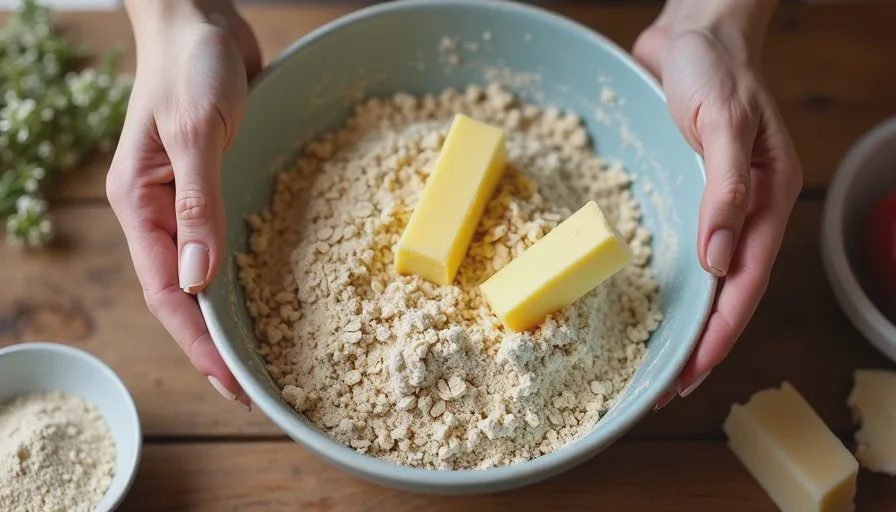
The topping is a straightforward combination of flour, oats, sugar, and cold butter. Oats give the classic crisp texture and keep the topping from becoming as dense as a shortbread. Flour provides structure. Sugar sweetens and helps browning. Cold butter is cut into the dry ingredients until the mixture resembles coarse crumbs with some larger pieces remaining. Those larger pieces melt and create the irregular, crisp surface that defines a good topping.
Cinnamon is the primary spice. A small pinch of nutmeg or ginger can be added if they are on hand, but they are not required. Vanilla is optional and can be stirred into the fruit or omitted.
These ingredients are pantry staples for most bakers who make any desserts at all. The quantities are small enough that even a partially used bag of oats or a nearly empty jar of cinnamon is sufficient.
Preparing the Fruit and Topping
Preparation is quick and requires no special equipment.
Wash the apple. Peel it if desired, then quarter, core, and cut it into even slices or small chunks. Even pieces cook at the same rate and produce a more consistent texture. Place the apple in a small mixing bowl. Add the sugar, starch, lemon juice, salt, and cinnamon. Toss until the pieces are evenly coated. The mixture will look slightly wet; that is expected.
For the topping, combine the flour, oats, sugar, and a pinch of salt in a second bowl. Add cold butter cut into small cubes. Use a pastry cutter, two knives, or fingertips to work the butter into the dry ingredients until the mixture is crumbly with some pea-sized pieces remaining. The butter should stay cold; if the kitchen is warm, the bowl can be chilled for a few minutes before assembling.
The entire preparation takes less than fifteen minutes. There is no dough to rest, no filling to cook ahead, and no complicated layering. The fruit goes into the baking dish, the topping is scattered over it, and the dish goes into the oven.
Choosing the Baking Dish and Oven Temperature
A small baking dish is ideal. A 6-inch round ramekin, a small gratin dish, two individual ramekins, or even a well-seasoned 6- or 8-inch cast-iron skillet all work. The goal is a vessel that holds the fruit in a relatively shallow layer so the topping can crisp and the fruit can cook through in the same time frame.
Butter the dish lightly if it is not well seasoned. Transfer the seasoned apple into the dish and spread it evenly. Scatter the topping over the fruit, covering the surface without packing it down. Some gaps are fine; they allow steam to escape and help the topping stay crisp.
Bake at 350°F to 375°F. A moderate temperature allows the fruit to soften and the topping to brown without burning. Higher heat can over-brown the oats before the apple is tender. Lower heat extends the time unnecessarily. Most small crisps finish in 25 to 35 minutes. The exact time depends on the apple variety, the size of the pieces, and the depth of the dish.
The crisp is done when the topping is golden brown, the fruit is tender when pierced with a knife, and the juices are bubbling at the edges. If the topping is browning too quickly, a loose piece of foil can be placed over the dish for the final minutes. If the fruit is not yet tender, the temperature can be lowered slightly and the baking continued until the texture is right.
Serving and Texture Notes
A one-apple crisp is best served warm. The contrast between the soft, spiced fruit and the crisp, buttery topping is clearest when the dessert is still hot from the oven. A small scoop of vanilla ice cream or a spoonful of lightly sweetened whipped cream is a classic accompaniment, but the crisp stands well on its own.
If the crisp must be held, it can sit at room temperature for an hour or two. The topping will soften gradually. Reheating in a moderate oven for 5 to 10 minutes restores much of the texture. The refrigerator softens the topping further; reheating still helps, but the result will not be identical to the freshly baked version.
The modest yield means that the question of leftovers rarely arises. Two people can finish the crisp in one sitting. If a little remains, it becomes a simple breakfast or afternoon snack without creating a storage problem.
Common Adjustments and Substitutions
Several ordinary variations work without rewriting the method.
If oats are not available, additional flour can be used for a more shortbread-like topping. The texture will be denser and less irregular, but still pleasant. If butter is limited, a neutral oil can be substituted in the topping; the result will be less rich and slightly less crisp, yet still functional.
Brown sugar can replace white sugar in both the fruit and the topping for a deeper flavor. Maple syrup or honey can be used in the fruit layer in small amounts, though they add liquid and may require a touch more starch.
Spices can be adjusted to taste. More cinnamon, a pinch of cardamom, or a little ginger all work. The filling should taste slightly brighter and more seasoned than the final dessert, because the topping balances the intensity.
If the apple is especially juicy, an extra half teaspoon of starch helps. If the apple is dry, a teaspoon of water or additional lemon juice can be added. These small adjustments are easy to make because the quantity of fruit is limited.
The method tolerates imperfect measuring better than many baked desserts. A slightly heavier or lighter hand with the topping still produces a usable result. The primary requirements are a firm apple, cold butter in the topping, and enough baking time for the fruit to soften and the surface to brown.
Why This Dessert Fits Real Schedules
A one-apple crisp requires no advance planning beyond having an apple and the basic pantry items on hand. It can be started after the main meal and be ready by the time the dishes are done. The active work is brief. The baking time is short. The cleanup is limited to one or two bowls and a small baking dish.
This reliability makes the dessert useful on weeknights when something warm and slightly special is wanted without a significant project. It also works as a simple weekend dessert that does not demand an entire afternoon. The scale keeps it honest: enough for two, timed for ordinary life, made from what is already in the kitchen.
Larger crisps have their place for gatherings or when deliberate leftovers are desired. For everyday baking, the one-apple version removes the friction of excess and keeps the focus on the pleasure of a warm, straightforward dessert. The fruit is tender. The topping is crisp. The portions match the table. That is the practical advantage of scaling a classic dessert to the size of a single apple.
Small batch, real life, something worth sharing.



No notes yet — write the first one.