

Four apple turnovers strike a useful balance for a small household. They are enough to share between two people with a second helping, or to serve four modest portions, without the surplus that comes from a full baking sheet of pastries. The filling can be prepared ahead, the assembly is straightforward, and the baking time is short enough to fit into a regular afternoon or evening.
I began making turnovers in this quantity after noticing that larger batches often sat longer than the pastry stayed at its best. Puff pastry, whether store-bought or homemade, is at its peak when freshly baked—crisp, flaky, and still warm. A tray of twelve or more can feel like a project that outlasts the moment it was meant to serve. Four turnovers keep the effort and the result aligned with the actual number of people at the table.
This approach works with either store-bought puff pastry or a simple homemade rough puff or pie dough. The store-bought route is the most practical for most days. The homemade option is available when time and inclination allow. Both produce a satisfying dessert when the apple filling is well seasoned and the pastry is handled with minimal fuss.
Why Four Is a Practical Number
Most published turnover recipes are written for larger yields. Doubling or tripling the filling and using multiple sheets of pastry makes sense for gatherings or for bakers who want leftovers. For a household of two or a small family, that volume creates storage questions and quality loss. Turnovers are best eaten the day they are baked or the next morning at the latest. After that the pastry softens and the filling can make the interior soggy.
Four turnovers fit on a standard baking sheet with room for air circulation. They bake evenly. They cool quickly. They can be finished in one sitting or saved for breakfast without occupying half the refrigerator. The active work—preparing the filling, cutting the pastry, assembling, and baking—stays within a manageable window of time.
The size of each turnover can be adjusted slightly. Larger squares produce generous individual servings. Smaller ones work well if the turnovers will be shared or served alongside something else. The method remains the same; only the cutting dimensions change.

Choosing and Handling the Pastry
Store-bought puff pastry is the fastest reliable option. Most grocery-store brands work well when handled cold and baked hot. Keep the pastry refrigerated until the filling is ready. Thaw it in the refrigerator according to package directions rather than on the counter, which can make the fat too soft and reduce flakiness.
Homemade pastry is worth the effort on days when there is more time. A simple rough-puff dough—made by incorporating cold butter into flour and bringing it together with ice water—produces good layers with less technique than classic laminated dough. A basic pie dough also works; it will be more tender than flaky, but still complementary to the apple filling. In either case, the dough should be kept cold, rolled to an even thickness, and used while the butter remains in distinct pieces.
Regardless of the source, the pastry should be rolled or unfolded on a lightly floured surface and cut into even squares. For four turnovers, one standard sheet of store-bought puff pastry is usually sufficient when cut into four squares. Homemade dough can be portioned and rolled to the same approximate size. Chilling the cut squares for 10 to 15 minutes before filling helps the pastry hold its shape during assembly and baking.
Avoid overworking the dough. Excess flour and repeated rolling toughen the pastry and reduce the lift. Work quickly, keep the ingredients cold, and return the pastry to the refrigerator if it becomes soft or sticky.
Building a Filling That Stays in Place
The filling needs to be flavorful, not watery, and thick enough that it does not leak excessively during baking. Apples are the foundation. A firm, tart-sweet variety such as Granny Smith, Honeycrisp, or a mix of the two holds its shape and provides balance. Softer apples can turn mushy and release more liquid.
Peel, core, and dice the apples into small, even pieces so they cook through in the relatively short baking time of the turnovers. A single medium-to-large apple, or two smaller ones, is usually enough for four turnovers. The exact amount depends on how full each pastry is meant to be.
Seasoning is simple and effective: sugar for sweetness, a pinch of salt to sharpen the flavors, cinnamon as the primary spice, and a small amount of lemon juice or zest to keep the apples bright. A teaspoon of flour or cornstarch mixed with the fruit helps thicken the juices that are released in the oven. Butter is optional; a few small pieces dotted over the filling add richness but are not required.
Cook the filling briefly on the stovetop if a softer texture is preferred, or leave it raw for a fresher apple presence. Pre-cooking reduces the liquid released during baking and is useful when the apples are especially juicy. Cooling the filling completely before assembly is important. Warm filling softens the pastry and can cause leaks.
Taste the filling before using it. Adjust sugar and spice so the flavor is clear and balanced. A filling that tastes slightly brighter and more seasoned than seems necessary will be correct once it is enclosed in pastry and baked.
Assembly Without Stress
Assembly is the stage where many bakers feel pressure. Keeping the process calm and sequential prevents most problems.
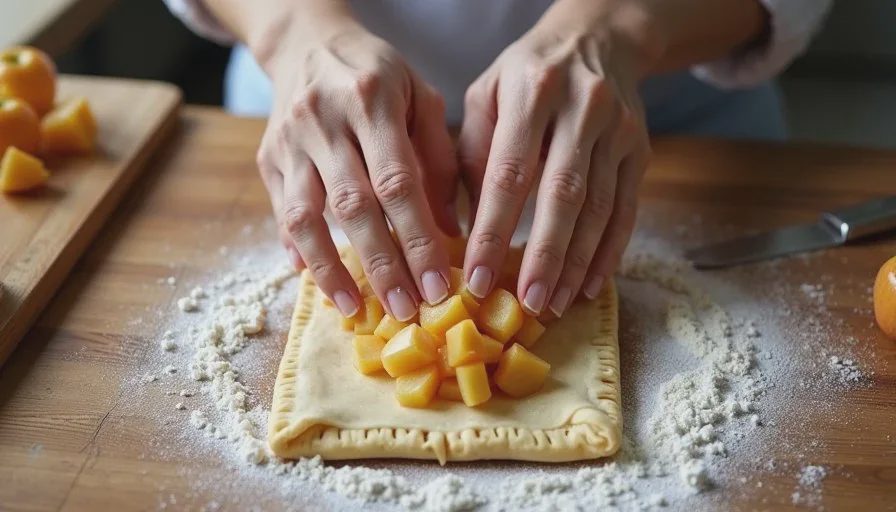
Place a chilled pastry square on the work surface. Spoon a modest amount of cooled filling into the center, leaving a clear border on all sides. Too much filling is the most common cause of bursting and leakage. It is better to underfill slightly than to overfill.
Brush the edges lightly with water or beaten egg so they seal. Fold the pastry into a triangle or rectangle, pressing the edges firmly. A fork can be used to crimp and further secure the seal. Cut a small vent in the top of each turnover to allow steam to escape. Without a vent the pastry can balloon and then collapse or split.
Transfer the assembled turnovers to a parchment-lined baking sheet. Brush the tops with egg wash for shine and color, or with milk or cream for a softer finish. A light sprinkle of coarse sugar adds texture and visual appeal. Chill the tray for 10 to 15 minutes if the pastry has softened during assembly. Cold pastry going into a hot oven produces better lift and cleaner edges.
The entire assembly for four turnovers takes only a few minutes once the filling and pastry are ready. Working with one or two at a time keeps the remaining pastry cold and manageable.
Baking and Doneness Cues
A hot oven is essential. Most puff pastry performs best at 400°F or slightly higher. Preheat thoroughly. The initial high heat creates steam that expands the layers before the structure sets.
Bake until the pastry is deeply golden and the visible filling is bubbling. Exact time varies with oven and pastry thickness, but 18 to 25 minutes is a common range for four turnovers. Rotate the sheet halfway through if the oven has hot spots.
The turnovers are done when the exterior is crisp and colored, the seams are sealed, and the filling is hot and thickened. Under-baked pastry remains pale and soft; over-baked pastry can become too dark at the edges while the interior filling is still acceptable. Visual cues are more reliable than the clock alone.
Cool the turnovers on the baking sheet for a few minutes, then transfer them to a rack. They are best served warm, when the pastry is still crisp and the filling is soft. If they must be held, a brief reheat in a moderate oven restores much of the texture.
Store-Bought Versus Homemade: Practical Trade-offs
Store-bought puff pastry is consistent, convenient, and produces reliable flakiness with almost no skill required. It is the better choice when time is limited or when the baker simply wants the dessert without additional steps. The main limitations are the presence of additives in some brands and less control over the fat and flour quality.
Homemade pastry offers better flavor control and the satisfaction of a fully made-from-scratch dessert. Rough puff or pie dough can be prepared a day ahead and refrigerated or frozen. The trade-off is additional time and the need to keep the dough cold throughout rolling and assembly. For many home bakers the homemade route is reserved for weekends or occasions when the process itself is part of the enjoyment.
Both options produce good turnovers when the filling is well made and the assembly is careful. The choice can be made according to the day rather than according to a fixed rule.
Common Points of Friction and Simple Fixes
Leakage is the most frequent issue. It is usually caused by overfilling, warm filling, or incomplete sealing. Reducing the amount of filling, cooling it thoroughly, and pressing the edges firmly resolve most leaks. A small amount of escaping juice is normal and can be accepted; large puddles indicate that one of the three factors needs adjustment.
Soggy bottoms can occur if the oven is not hot enough or if the turnovers sit too long on a warm baking sheet after baking. Baking on parchment at a high temperature and transferring the turnovers to a rack after a few minutes of cooling help keep the base crisp.
Pale pastry usually means the oven was not fully preheated or the temperature was too low. Egg wash improves color, but heat is the primary driver of browning and lift.
Tough pastry often results from overworking the dough or using too much flour during rolling. Minimal handling and a light touch with flour keep the texture tender or flaky according to the type of dough.
These problems are ordinary and correctable. They do not indicate that turnovers are inherently difficult. They indicate that the pastry and filling respond to temperature, quantity, and handling in predictable ways.
Serving and Storing
Four turnovers are ideally served the day they are baked. A light dusting of powdered sugar, a small scoop of ice cream, or a spoonful of lightly sweetened whipped cream turns them into a complete dessert. They also stand well on their own.
If leftovers remain, store them loosely covered at room temperature for a few hours or in the refrigerator for the next day. Reheat in a 350°F oven for 5 to 8 minutes to restore crispness. The microwave softens the pastry and is best avoided if texture matters.
The modest yield means that leftovers are limited and manageable. The dessert stays connected to the occasion rather than becoming an ongoing storage project.
Four apple turnovers offer a practical way to enjoy a classic pastry dessert without excess. The process can be as simple as store-bought pastry and a quick stovetop filling, or as involved as a homemade dough prepared ahead. In either case the result is a warm, flaky, fruit-filled pastry sized for the people who will actually eat it.
Small batch, real life, something worth sharing.



No notes yet — write the first one.