
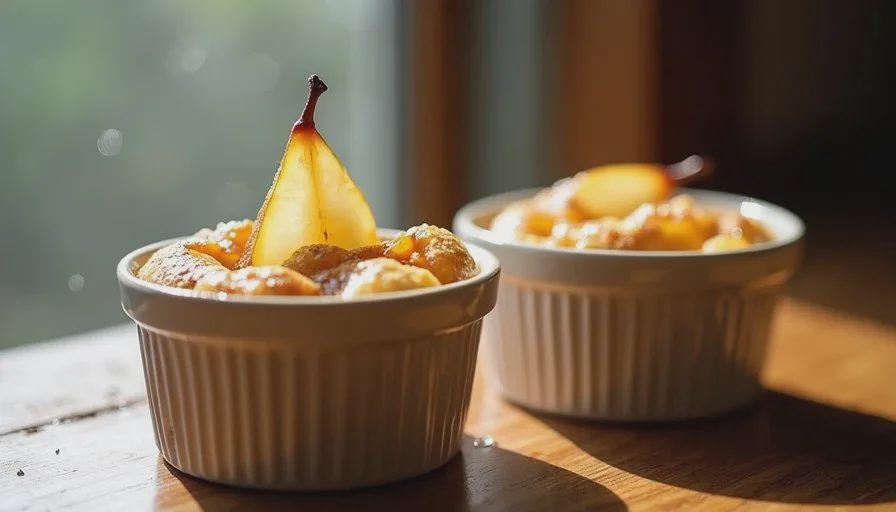
Two small pear cakes are the right scale for a quiet afternoon when the weather keeps everyone inside. They produce a warm, gently spiced dessert that feels complete for two people without the surplus of a full-size cake. The method is straightforward, the ingredients are ordinary, and the baking time is short enough to fit into the stretch of a rainy day without becoming a project.
I began making cakes this size after noticing how often a standard recipe left us with more dessert than we wanted to finish while it was still at its best. A large pear cake is excellent for a gathering. For an ordinary afternoon at home, two individual cakes—or one small cake divided in half—keep the effort and the result aligned with the moment. The cakes are meant to be eaten warm, when the fruit is soft and the crumb is tender. That window is short. Scaling the recipe protects it.
This version uses one or two ripe but firm pears, a modest amount of flour, sugar, butter or oil, an egg, and basic spices. No mixer is required. The batter comes together in one bowl, and the cakes bake in ramekins, small loaf pans, or muffin tins. The process is calm enough for a day when the rain is steady and the kitchen is the most pleasant place in the house.
Why Pears Work Well in Small Cakes
Pears bring moisture, gentle sweetness, and a soft texture that complements a simple cake crumb. When they are ripe but still firm, they hold their shape during baking and release just enough juice to keep the interior tender without making it soggy. Softer, very ripe pears can be used if they are cut into larger pieces or lightly cooked first, but firmer fruit is more reliable for this style of cake.
A single medium pear is often enough for two small cakes. Two smaller pears give a little more fruit and a more generous distribution. The exact amount is flexible; the goal is a noticeable presence of pear in each cake rather than a fruit-heavy dessert that overwhelms the crumb.
Spices should stay in the background. A modest amount of cinnamon or cardamom supports the pear without competing with it. Vanilla, if available, rounds out the flavor. The cake itself is meant to be simple so the fruit remains the focus.
Because the cakes are small, they bake quickly and cool quickly. They are best served warm, when the contrast between the soft pear and the tender crumb is most pleasant. That timing suits a rainy afternoon: the cakes can go into the oven while the light is still good and come out in time for a late afternoon pause.
Core Ingredients and Simple Ratios
The ingredient list stays short and practical.
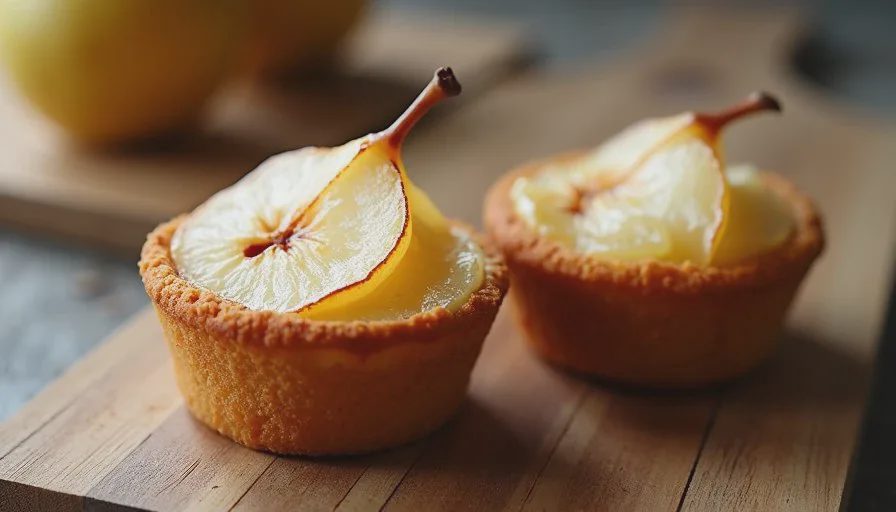
One or two firm-ripe pears form the fruit base. Peel them or leave the skin on according to preference; the skin softens during baking and is edible, though some people prefer it removed. Core and cut the pears into small chunks or thin slices so they cook through in the relatively short baking time.
Flour provides structure. All-purpose flour is sufficient. The amount is modest relative to the fruit and fat, which keeps the crumb tender rather than sturdy.
Sugar sweetens the batter and helps browning. Granulated sugar keeps the flavor clean; a little brown sugar can be used for a deeper note. The quantity is balanced so the pears remain the primary sweetness.
Fat—butter or a neutral oil—tenderizes the crumb and carries flavor. Melted butter gives a richer taste; oil produces a slightly moister cake that stays soft longer. Either works. Softened butter can be used if a creaming method is preferred, but melting keeps the process simpler.
One egg binds the batter and contributes to structure and color. Room temperature is helpful but not essential at this small scale.
Leavening is modest. A small amount of baking powder gives the cakes a gentle rise without making them domed or cake-like in a way that competes with the fruit.
Salt and spice complete the batter. A pinch of salt sharpens the flavors. Cinnamon is the most straightforward spice; cardamom or a little ginger can be used if they are on hand and suit the mood of the day.
These ingredients are pantry staples for most bakers who make any desserts at all. Their reliability comes from consistent but not obsessive measuring and from attention to the ripeness of the pears.
Mixing and Preparing the Fruit
The method is deliberately uncomplicated.
Prepare the pears first. Peel if desired, then core and cut into even pieces. Toss them with a teaspoon of sugar and a pinch of the spice if you want a lightly sweetened fruit layer. Set them aside while the batter is mixed.
In a medium bowl, whisk or stir together the dry ingredients: flour, sugar, baking powder, salt, and spice. In a separate small bowl or measuring cup, combine the melted butter or oil, the egg, and any vanilla. Pour the wet ingredients into the dry and stir until no dry streaks remain. The batter will be thick but spreadable. Over-mixing is unnecessary and can toughen the crumb; stop as soon as the flour disappears.
If the batter seems unusually stiff, a teaspoon of milk or water can loosen it. If it seems thin, a small spoonful of flour can adjust it. At this scale the corrections are easy to make by eye.
Butter the ramekins, small pans, or muffin cups generously. Divide the batter between them. Arrange the pear pieces on top, pressing them in slightly so they sit partially submerged. A light sprinkle of sugar over the fruit encourages browning and a bit of caramelization.
The entire preparation takes less than twenty minutes. There is no dough to rest, no complicated layering, and no need for precise timing beyond getting the cakes into the oven.
Baking for a Warm, Tender Result
A moderate oven—350°F to 375°F—gives the cakes time to rise and set without over-browning the tops before the centers are done. Because the cakes are small, they bake faster than a full-size cake. Begin checking at 18 to 20 minutes. The cakes are ready when the tops are golden, a toothpick inserted into the cake portion (not a piece of pear) comes out with a few moist crumbs, and the fruit is tender when pierced.
Over-baking dries the crumb and can make the pears overly soft. Under-baking leaves the centers dense. The visual and tactile cues are more useful than a fixed number of minutes. The small size means the difference between done and over-done can be only a few minutes, so it is worth watching the first time the recipe is made.
Once the cakes are out of the oven, let them cool in the pans for a few minutes so they firm slightly and become easier to handle. They can be turned out or served directly from the ramekins. A warm cake is the point of this dessert; there is no need to wait until they reach room temperature.
Serving and the Window of Best Texture
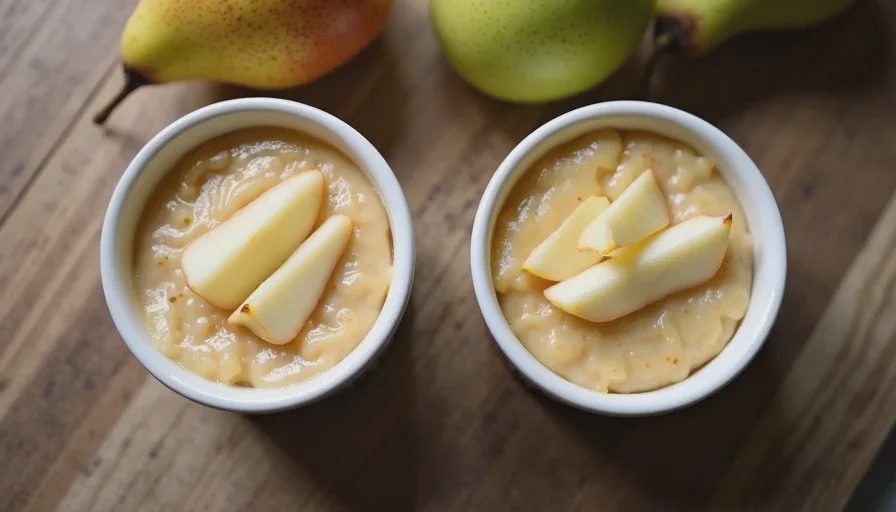
These cakes are at their best while still warm. The crumb is tender, the pears are soft, and the whole dessert feels cohesive. A small spoonful of cream, yogurt, or ice cream is a pleasant addition if it is on hand, but the cakes stand well on their own.
If they must be held, they can sit at room temperature for an hour or two. The texture will soften slightly as they cool. Reheating in a low oven for a few minutes restores much of the warmth and tenderness. Refrigeration firms the crumb and is best avoided unless the cakes will be kept overnight; in that case, a brief reheat still improves them.
Because only two cakes are made, the question of leftovers rarely arises. The dessert is finished while it is still in its ideal state. That is one of the quiet advantages of baking at this scale.
Adjustments and Ordinary Variations
A few simple changes work without rewriting the method.
If pears are not available, a firm apple can be substituted. The flavor will be different but still compatible with the same batter and spices. Soft summer fruit is less suitable because it releases more liquid and can make the small cakes soggy.
Brown sugar can replace part or all of the white sugar for a deeper flavor. A spoonful of ground almonds or a little oat flour can be added to the dry ingredients for a slightly heartier crumb. These additions are optional and should stay modest so the pear remains the focus.
The cakes can be baked as two individual ramekins, as a single small loaf or round that is later divided, or even as a few muffin-size portions. The baking time will shift slightly with the pan size; smaller portions finish faster. The principle remains the same: keep the scale small enough that the dessert matches the number of people and the length of the afternoon.
Spices can be adjusted to taste. More cinnamon, a pinch of nutmeg, or a little cardamom all work. The batter should taste lightly sweet and gently spiced before the fruit is added; the pears will balance the intensity once everything is baked.
Why This Dessert Fits a Rainy Afternoon
A rainy day often creates a stretch of time that feels open but not entirely unstructured. A small baking project that does not demand precision or a long commitment fits that mood. The process of cutting the pears, stirring the batter, and watching the cakes rise in the oven is calm rather than urgent. The result is warm and self-contained—a dessert that can be eaten at the table or carried to a chair by the window without ceremony.
Large cakes have their place when more people are present or when leftovers are intentional. For an ordinary afternoon when the household is small and the weather is steady, two warm pear cakes are enough. They use what is on hand, they finish in a reasonable time, and they are meant to be eaten while they are still at their best. The scale keeps the dessert honest. The fruit stays the focus. The kitchen stays quiet.
That is the practical argument for baking only as much as the afternoon requires.
Small batch, real life, something worth sharing.



No notes yet — write the first one.