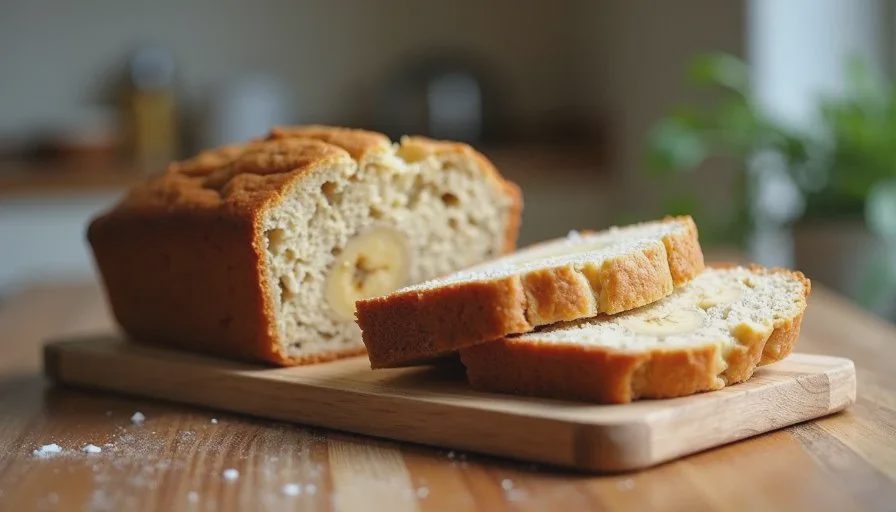
Banana bread that looks done on the outside but remains wet, dense, or gummy in the center is one of the most frequent problems home bakers encounter. The loaf may have a well-browned crust and a toothpick that comes out clean near the edges, yet the middle stays heavy and under-set. This result is rarely a mystery and almost never a pure failure of skill. It usually traces to moisture balance, baking time, pan choice, or banana preparation—factors that can be identified and corrected.
I have baked through this problem many times, both in professional test kitchens and at home. Early versions often came out with a sticky band through the center even when the recipe was followed closely. Over repeated bakes the pattern became clear: the issue was less about technique in the mixing bowl and more about how much moisture the bananas contributed, how the batter was distributed, and how heat moved through the pan. Once those variables were adjusted, the crumb became consistently even and fully set without drying out the edges.
The guidance that follows addresses both the loaf already in the oven or on the counter and the next bake. Some steps can improve a current loaf; most of the lasting fixes apply to future attempts.
Why the Center Stays Wet
Several ordinary factors produce a wet or gummy center.
Excess moisture from the bananas is the most common cause. Very ripe bananas contribute more liquid than less ripe ones. Recipes that call for a volume measure of mashed banana rather than a weight can vary widely depending on how the fruit is packed and how soft it is. When the total liquid in the batter exceeds what the flour and eggs can structure, the center remains dense and sticky even after the exterior is browned.
Under-baking is the second frequent cause. Banana bread is denser than many cakes and requires thorough heat penetration to set the crumb. A loaf that is pulled from the oven as soon as the top is golden often still has an under-cooked center. The residual heat of a large loaf can continue to cook the middle after it leaves the oven, but only if the center has already reached a high enough temperature. If it has not, the crumb stays wet.
Pan size and material affect heat transfer. A pan that is too small forces the batter deeper, so the center takes longer to cook. A dark pan browns the exterior faster, creating the appearance of doneness before the interior is ready. A glass pan retains heat longer and can finish the center more gently, but it also requires careful timing so the edges do not over-bake.
Oven temperature that runs cooler than the dial indicates lengthens the time needed for the center to set. An oven that runs hot can set the exterior and create a crust while the middle lags behind. Without an oven thermometer these variations remain hidden.
Finally, the way the bananas are prepared matters. Large chunks of banana release moisture late in the bake and can leave wet pockets. Thoroughly mashed bananas distribute more evenly, though over-mashing can make the batter heavier. The ideal is a mixture of well-mashed fruit with a few small pieces for texture, not large intact chunks.
These causes often combine. A wet batter in a dark pan in a cool oven produces the classic wet-centered loaf. Addressing any one factor helps; addressing the main ones together produces reliable improvement.
What to Do with the Loaf You Already Have
If the banana bread is already baked and the center is wet, a few options remain.
Return the loaf to a moderate oven. If the center is only slightly under-set and the exterior is not yet too dark, place the loaf back in a 325°F oven for 10 to 15 minutes. Tenting the top loosely with foil prevents further browning while the interior continues to cook. Check with a long skewer or instant-read thermometer; the center should reach at least 200°F for a fully set crumb.
If the loaf is already cool and the wetness is moderate, slicing and toasting individual pieces can improve the texture. The dry heat of a toaster or toaster oven drives off some surface moisture and firms the crumb enough to make the bread enjoyable. This does not fix the entire loaf, but it rescues servings.
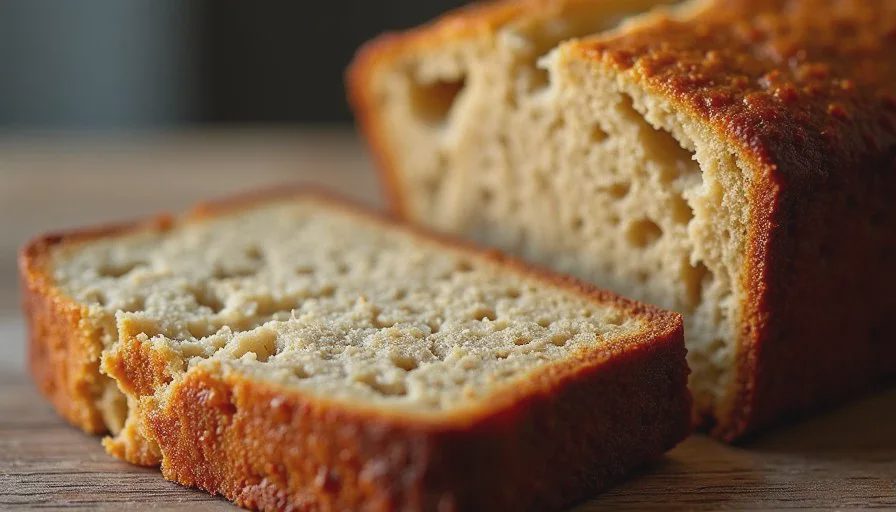
In more severe cases the center may remain unappetizing even after additional baking. The outer portions are often still usable. Cut away the wet middle and use the firmer slices for toast, bread pudding, or French toast. The flavor is usually good even when the texture of the center is not.
These are recovery steps, not ideal outcomes. The more useful work happens in the next bake.
Adjustments That Prevent a Wet Center Next Time
The lasting fixes are straightforward and can be applied one at a time or together.
Weigh the bananas when possible. A typical medium banana yields about 100 to 120 grams of mashed fruit. Recipes that call for “three ripe bananas” can easily range from 250 to 400 grams depending on size and ripeness. Staying within a consistent weight range removes a major source of variability. If the bananas are extremely ripe and liquid, reduce the added liquid in the recipe slightly or add an extra tablespoon of flour.
Mash the bananas thoroughly but stop short of a completely smooth puree. Large chunks create wet pockets. A few small soft pieces are fine for texture; big intact sections are not. A potato masher or fork is usually sufficient.
Check the batter consistency before it goes into the pan. Banana bread batter should be thick but pourable, not soupy. If it looks significantly thinner than previous successful batches, add a tablespoon or two of flour. If it looks unusually stiff, a small splash of milk can loosen it. These micro-adjustments are easier in a small batch and give immediate feedback.
Use the correct pan size. Most standard banana bread recipes are written for a 9×5-inch loaf pan. A smaller pan makes the batter deeper and increases the risk of a wet center. If only a smaller pan is available, reduce the recipe or accept a longer baking time and check the center carefully. Light-colored metal pans generally give more even results than dark ones for this style of quick bread.
Verify oven temperature with a thermometer. Many home ovens run 15 to 25 degrees off. Baking at the temperature the recipe actually intends is one of the simplest ways to improve doneness.
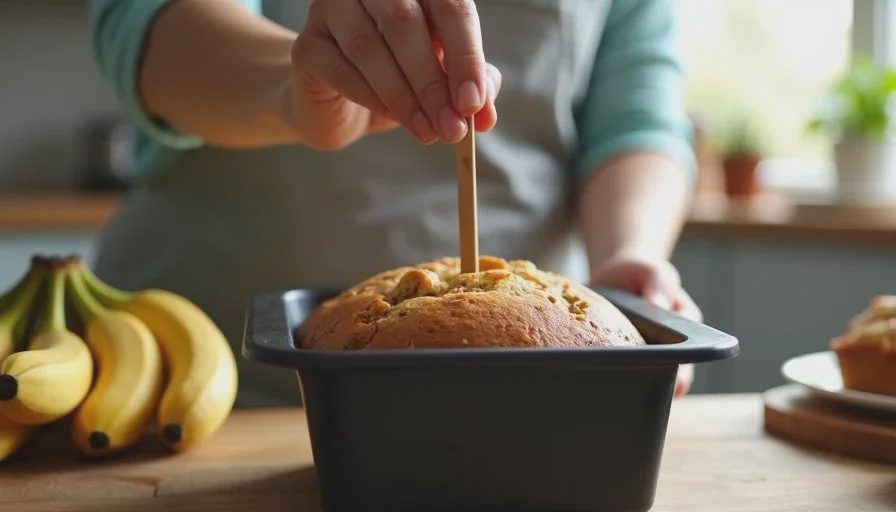
Bake until the center is truly done. Visual cues help: the top should be deep golden, the edges should pull slightly from the pan, and a long skewer inserted in the center should come out with a few moist crumbs, not wet batter. An instant-read thermometer is even more reliable; 200–205°F in the center indicates a set crumb for most banana breads. Begin checking at the early end of the suggested time range and continue as needed. Tent with foil if the top is browning too quickly.
Allow the loaf to cool in the pan for about ten minutes, then turn it out onto a rack. Residual heat continues to gently set the crumb during this period. Slicing too early, while the loaf is still very hot, can make a properly baked center appear gummier than it will be once cooled.
Ingredient and Method Notes That Matter
A few additional details influence the final texture.
The ripeness of the bananas affects both flavor and moisture. Deeply speckled or blackened bananas give the best flavor but also the most liquid. If the bananas are extremely soft, reducing other liquids by a tablespoon or adding a small amount of extra flour compensates. Under-ripe bananas produce less moisture and less flavor; they are not ideal for this style of bread.
Eggs contribute structure. A recipe that is already high in banana moisture benefits from the full amount of egg called for; reducing eggs can leave the crumb weaker and more prone to gumminess.
Oil or butter changes the perception of moisture. Oil tends to produce a moister crumb that stays soft longer. Butter gives better flavor for some palates but can make the bread firm faster as it cools. Either can work; the key is consistency from one bake to the next so adjustments remain meaningful.
Mixing method matters less than moisture balance for this particular problem, yet over-mixing can still toughen the crumb. Stir only until the flour disappears. A few small lumps are preferable to a smooth but over-worked batter.
Altitude and humidity play secondary roles. At higher elevations the batter may need slight adjustments to flour or liquid. In very humid kitchens the flour may already contain more moisture, effectively increasing the total liquid. These factors are less common causes than the primary ones listed earlier, but they are worth noting if the same recipe behaves differently in different seasons or locations.
A Simple Checklist for the Next Bake
Before mixing, confirm the weight or consistent volume of the bananas.
Mash thoroughly, avoiding large chunks.
Use the pan size the recipe assumes, or adjust expectations for a different pan.
Confirm oven temperature with a thermometer if possible.
Bake until a skewer shows only moist crumbs or the center reaches 200–205°F.
Cool in the pan briefly, then on a rack before slicing.
These steps address the most frequent sources of a wet center. They do not require special equipment beyond a kitchen scale (helpful but not mandatory) and an oven thermometer (strongly recommended for consistent results). Most bakers see improvement within one or two adjusted bakes.
When the Problem Persists
If the center remains wet after the main adjustments, consider the recipe itself. Some older or heavily adapted formulas are simply too high in moisture for the amount of structure provided by the flour and eggs. In that case, increasing the flour by two to four tablespoons or reducing the banana by a small amount can restore balance. Keeping notes on exact banana weight, flour amount, and final internal temperature builds a personal reference that becomes more useful than any single published recipe.
Banana bread is forgiving in flavor even when the texture is imperfect. The adjustments above bring the texture in line so the good flavor can be enjoyed without the dense, sticky band through the middle. Once the moisture and heat variables are under control, the loaf emerges with an even crumb that is moist without being wet, and the problem of the under-set center becomes infrequent rather than expected.
The difference is rarely dramatic technique. It is clearer attention to the moisture the bananas actually contribute and to the heat the center of the loaf actually receives. Those two factors explain most wet-centered banana breads and point directly to the fixes that work.
Small batch, real life, something worth sharing.


No notes yet — write the first one.