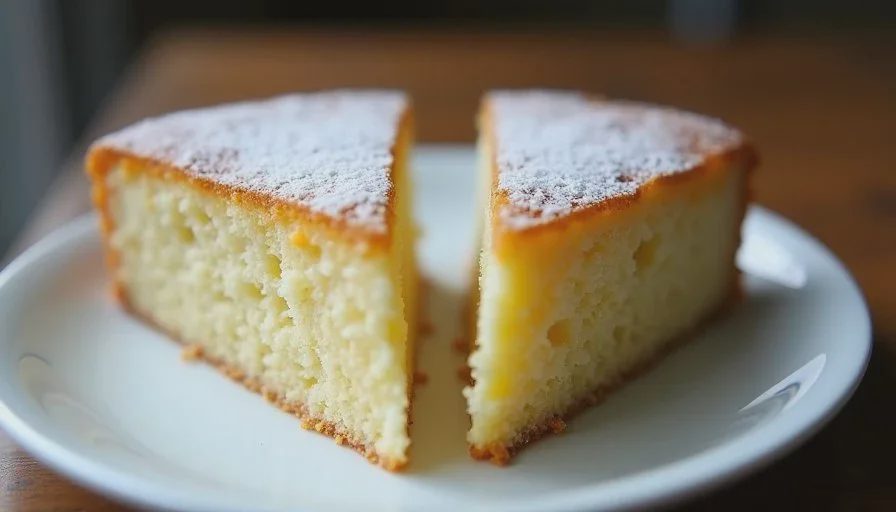
Small cakes frequently lose moisture more quickly than their larger counterparts. A full-size layer cake can remain soft for several days under proper storage, while a cake baked in a six-inch pan or a single small loaf may feel noticeably drier by the next morning. This difference is not a failure of the recipe or the baker’s skill. It is a predictable result of surface area, volume, and the way heat and air interact with the finished crumb.
I first paid close attention to this pattern when I began adapting professional cake formulas for home use. In a bakery, cakes are often large, and any cut surfaces are managed quickly or protected with glaze, syrup, or frosting. At home, a small cake is frequently left with more exposed surface relative to its total mass. The same formula that produces a moist crumb in a larger pan can feel drier when the same batter is baked in a smaller vessel and stored the same way. Understanding the physical reasons makes it possible to adjust handling and storage so the cake stays closer to its original texture.
The explanation rests on a few basic principles of moisture movement and heat transfer. None of them require laboratory equipment. They can be observed in any home kitchen once the baker knows what to look for.
Surface Area Relative to Volume
The most important factor is the ratio of surface area to volume. A small cake has more exterior surface for each unit of interior crumb than a large cake does. Moisture leaves the cake primarily through the surfaces that are exposed to air. When a greater proportion of the cake is surface, a greater proportion of its total moisture is vulnerable to evaporation.
A large cake has a substantial interior that is insulated by the outer layers. Even as the exterior begins to dry, the center remains protected for longer. A small cake has less interior to draw from. Once moisture begins to move outward, the entire crumb is affected more quickly.
This principle appears in other foods as well. A thin steak cooks and dries faster than a thick roast. A small loaf of bread stales faster than a large one under the same conditions. The geometry is the same. Reducing the size of the bake increases the relative importance of the surface.
In practical terms, a cake baked in a six-inch pan or divided into cupcakes will lose moisture faster than the same batter baked in a nine-inch pan, even when the recipes and baking times are adjusted correctly. The difference becomes noticeable during storage rather than immediately after baking.
How Baking Itself Affects Moisture
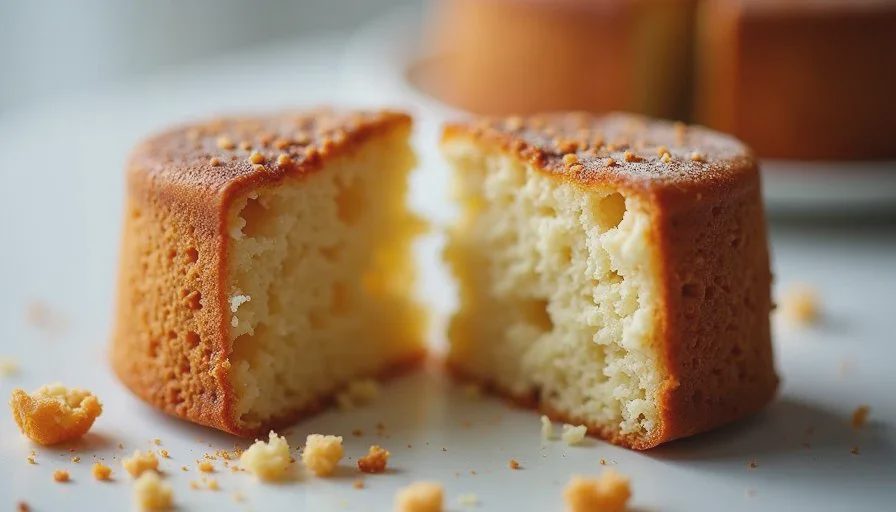
The baking process sets the stage for later moisture loss. During baking, water turns to steam and some of it leaves the batter. The longer the cake is in the oven and the higher the temperature, the more moisture can be driven off. Small cakes generally bake faster than large ones because heat reaches the center more quickly. That shorter time can be an advantage, yet it also means the baker must watch carefully to avoid over-baking.
Over-baking is especially costly in a small cake. A few extra minutes that might be tolerable in a large cake can push a small one past the point of ideal moisture. The exterior sets and begins to dry while the interior is still finishing. Once the cake cools, that lost moisture cannot be restored by ordinary means.
Even when baking time is correct, the small cake leaves the oven with a higher proportion of its surface already exposed and partially dried. The crust that forms during baking is a barrier, but it is not impermeable. Air continues to pull moisture from the crumb after the cake has cooled.
Pan material and color also play a role. Dark pans absorb more heat and can accelerate the drying of the exterior. Light-colored aluminum pans tend to bake more gently. Glass and ceramic retain heat longer after the cake is removed from the oven, which can continue the cooking process for a short time. For small cakes these differences are more noticeable because there is less mass to buffer the effect.
Cooling and the First Hours After Baking
The period immediately after baking is critical. A cake continues to lose moisture while it cools, especially if it is left uncovered on a rack in a dry kitchen. Large cakes have more thermal mass and cool more slowly, which gives the interior time to redistribute moisture. Small cakes cool quickly. The temperature drop is steeper, and the surface begins to equilibrate with the surrounding air almost at once.
Leaving a small cake uncovered for an extended cooling period accelerates drying. Once the cake is no longer hot, it should be protected. A light covering with a clean towel during the final stage of cooling can help, followed by proper wrapping or container storage once the cake reaches room temperature. Frosting or a simple glaze applied while the cake is still slightly warm can also seal the surface and slow moisture loss, though the cake must not be so warm that the frosting melts.
In dry climates or in kitchens with forced-air heating or cooling, the effect is more pronounced. The air itself pulls moisture from the crumb more aggressively. In humid conditions the cake may stay softer longer, but it can also become sticky or encourage mold if storage is not careful. The small cake responds to ambient humidity more rapidly than a large one because of its higher surface-to-volume ratio.
Storage Conditions That Magnify the Difference
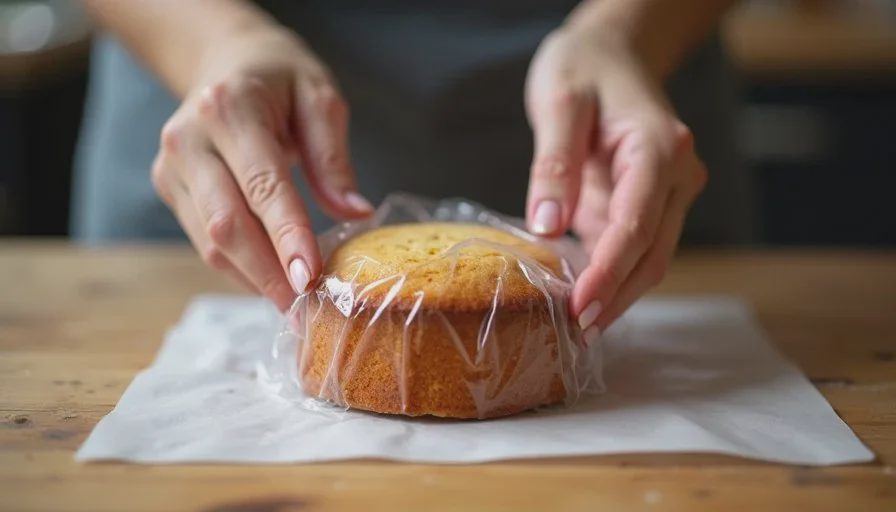
Once the cake is cool, storage determines how quickly the texture changes. An unfrosted small cake left on a plate under a simple cover will dry faster than the same cake tightly wrapped or stored in an airtight container. Each time the covering is removed, fresh air contacts the surface and more moisture escapes.
Refrigeration accelerates staling for most cakes. The cool temperature causes starch molecules to recrystallize, firming the crumb and making it feel drier even when the actual water content has not changed dramatically. Small cakes show this effect sooner because a larger fraction of their crumb is affected by the temperature change. If refrigeration is necessary because of perishable fillings or frosting, the cake should be well wrapped and brought back to room temperature before serving. The texture will still be firmer than a cake stored at room temperature, but the difference will be less severe.
Freezing is kinder to texture than refrigeration when done properly. A well-wrapped small cake can be frozen and thawed with less damage to the crumb than the same cake would suffer after several days in the refrigerator. The key is protecting the surface completely so that freezer air does not pull moisture away during storage.
Frosting and fillings act as barriers. A cake that is fully enrobed in buttercream or ganache loses moisture more slowly than an unfrosted cake. Simple syrup brushed onto the cut surfaces or the exterior before frosting adds a small amount of moisture and creates an additional barrier. These techniques are especially useful for small cakes that will be held for more than a day.
Practical Ways to Protect a Small Cake
Understanding the causes points directly to useful adjustments.
Bake only until the center tests done. For small cakes this often means checking several minutes earlier than a larger recipe would suggest. A toothpick with a few moist crumbs is preferable to a completely clean one. Over-baking is the single most common reason a small cake starts dry.
Cool the cake efficiently but protect it promptly. Once the cake is out of the pan and no longer steaming, cover it loosely and then wrap or container it as soon as it reaches room temperature. Avoid long periods of uncovered cooling on a rack in a dry kitchen.
Use a simple syrup if the cake will be held. A light brush of sugar syrup on the exterior or on cut surfaces adds moisture and slows evaporation. The syrup can be plain or flavored with a little vanilla or citrus. It is one of the most effective low-effort protections for small cakes.
Frost or glaze when practical. Even a thin glaze seals the surface. A full frosting layer is more protective still. If the cake is to be served plain, tight wrapping or an airtight container becomes more important.
Store at room temperature when possible. Refrigeration is appropriate for cakes with perishable components, but it firms the crumb more quickly. If the cake must be refrigerated, wrap it well and allow it to return to room temperature before serving.
Choose the pan and portion with storage in mind. If a cake is known to be needed over several days, baking a slightly larger one and protecting the cut surfaces may preserve moisture better than baking two very small cakes. Conversely, if the cake will be finished the same day, the small size is an advantage because there is no leftover to manage.
These steps do not change the fundamental geometry of a small cake. They simply reduce the rate at which moisture leaves the crumb and protect the texture that was achieved during baking.
What the Difference Means for Recipe Development
When adapting a large-cake formula to a small pan, moisture retention deserves deliberate attention. Simply dividing the ingredients by weight is a starting point, but the smaller cake may benefit from a slight increase in fat or liquid, a modest reduction in baking time, or the addition of a syrup step that the original large recipe did not require. These adjustments compensate for the higher surface-to-volume ratio rather than changing the intended flavor or structure.
Test bakes of small cakes should include a check of the texture the following day. A cake that tastes perfect a few hours after baking may reveal its moisture limitations after overnight storage. Notes on that second-day texture are as useful as notes on the initial crumb.
The same principles apply to other small baked goods. Small loaves of quick bread, individual coffee cakes, and mini bundts all share the higher surface-to-volume ratio and therefore the faster moisture loss. The protective strategies—careful baking, prompt covering, syrup, and airtight storage—transfer directly.
Small cakes are not inherently inferior. They are simply more exposed. Once that exposure is recognized, the baker can protect the crumb with ordinary techniques and keep the texture closer to what the recipe intended for a longer period. The cake still stales eventually; all starch-based baked goods do. The goal is to slow the process enough that the cake remains enjoyable for the time it will actually be eaten.
That understanding turns a common frustration into a manageable variable. The small cake does not dry out because the baker failed. It dries out because of its size and the conditions around it. Adjusting those conditions brings the texture back under control.
Small batch, real life, something worth sharing.
No notes yet — write the first one.