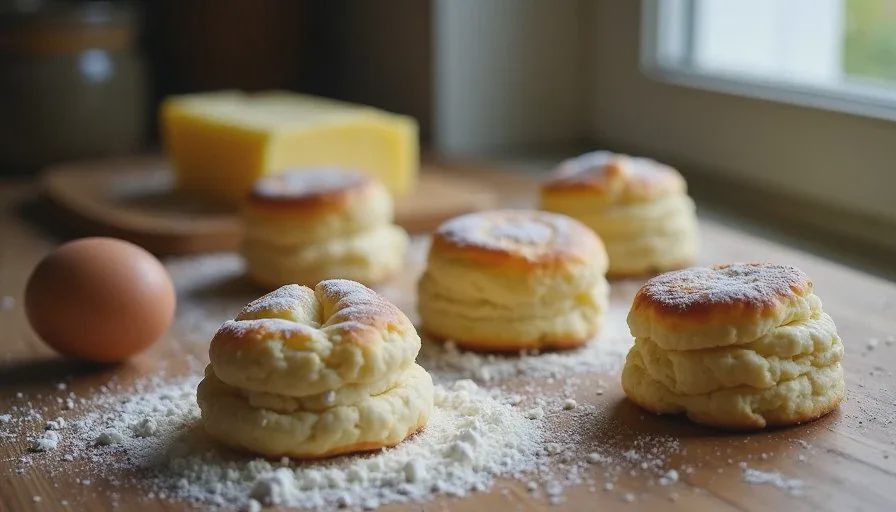
Flour, butter, and one egg form a surprisingly complete foundation for small-batch baking. With the addition of a little sugar, salt, and a leavening agent if they are on hand, these three ingredients can produce biscuits, a simple cake, shortbread-style cookies, or a basic quick bread. The results will not be elaborate, yet they can be tender, flavorful, and well suited to an ordinary day when the cupboard is sparse or a trip to the store is not practical.
I began paying attention to this minimal combination after several evenings when the more interesting ingredients had already been used and only the core staples remained. Rather than treat those evenings as a reason to skip baking, I tested what could be made reliably with the fewest possible additions. The goal was not to invent clever substitutions or stretch ingredients past their useful limits. The goal was to identify a handful of preparations that stay honest to the ingredients and still produce something worth eating.
The suggestions that follow assume a basic pantry that also contains sugar, salt, and baking powder or baking soda. Milk or water can be used as the liquid. Vanilla or spices are welcome if present, but they are not required. Everything is scaled for a small household so that the finished baking can be finished while it is still at its best.
1. Simple Drop Biscuits or Cream Biscuits
Biscuits are one of the most forgiving ways to use flour, butter, and a single egg. The egg adds richness and helps bind the dough; the butter provides tenderness and flavor; the flour gives structure.
For a small batch, start with about one cup of flour, one to one-and-a-half teaspoons of baking powder, a pinch of salt, and two to three tablespoons of cold butter. Cut the butter into the dry ingredients until the mixture looks like coarse crumbs. Beat the egg with a few tablespoons of milk or water and stir it into the flour mixture just until a soft dough forms. Additional liquid can be added by the teaspoon if the dough seems dry.
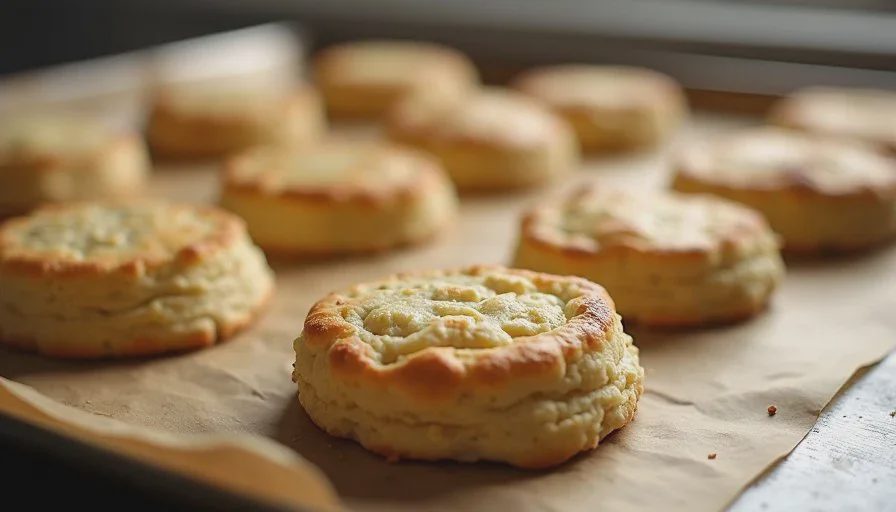
Drop the dough in rough mounds onto a baking sheet or into a small greased pan. There is no need for careful shaping. Bake at 425°F until the biscuits are risen and golden, usually 12 to 15 minutes. The result is a tender, slightly rich biscuit that can be eaten plain, with butter, or alongside a simple meal.
The egg makes these biscuits a little more substantial than a classic cream biscuit, yet the method remains the same: minimal mixing, cold fat, and a hot oven. If the dough is handled lightly, the crumb stays tender rather than tough. This is one of the fastest and most reliable options when the ingredient list is short.
2. A Small Single-Layer Cake or Snack Cake
A modest cake is possible with the same three ingredients plus sugar and a leavener. The texture will be closer to a snack cake or a simple tea cake than to a light, layered celebration cake, but it can still be moist and pleasant.
Cream or stir together three to four tablespoons of softened or melted butter with about one-third cup of sugar. Beat in the egg until the mixture is combined. Stir in roughly three-quarters of a cup of flour, a small amount of baking powder, and a pinch of salt. A splash of milk or water loosens the batter if it seems too stiff. The batter should be thick but spreadable.
Scrape the batter into a small greased pan—an 6-inch round, a loaf pan, or even a large ramekin. Bake at 350°F until the top is golden and a toothpick inserted in the center comes out with a few moist crumbs, usually 20 to 28 minutes depending on the pan. Cool briefly and serve warm or at room temperature.
The cake will be denser than one made with more eggs or a higher proportion of liquid, yet the butter and sugar give it flavor and tenderness. A light dusting of sugar on top before baking encourages a delicate crust. If spices or vanilla are available, they can be added to the batter; if not, the cake remains good without them.
This version is useful when something sweet is wanted and the only egg in the house needs to be used. The small scale means there are no large leftovers, and the cake can be finished the same day or the next morning.
3. Shortbread-Style Cookies or Pressed Cookies
When a crisp or crumbly texture is preferred, a shortbread-style dough works well with flour, butter, and a single egg yolk (or the whole egg if the white is not needed elsewhere). The egg yolk adds richness and helps the dough hold together without making the cookies tough.
Combine about one cup of flour with a pinch of salt and three to four tablespoons of sugar. Work in four to five tablespoons of soft butter until the mixture looks like damp crumbs. Add the egg yolk (or a portion of the beaten whole egg) and press the dough together. If it seems dry, a few drops of water can help; if it seems sticky, a light dusting of flour brings it back.
Press the dough into a small pan or shape it into a log for slicing. Bake at 325°F to 350°F until the edges are lightly colored and the surface looks set. Shortbread is done when it is firm and pale golden rather than deeply browned. Cool completely before cutting or moving, as the cookies are fragile while warm.
The result is a buttery, tender cookie that relies on the quality of the butter for flavor. Because only one egg is used, the dough stays rich rather than cakey. These cookies keep well for a few days in an airtight container, making them a practical option when a small sweet is wanted over more than one day.
4. A Basic Quick Bread or Scone-Like Loaf
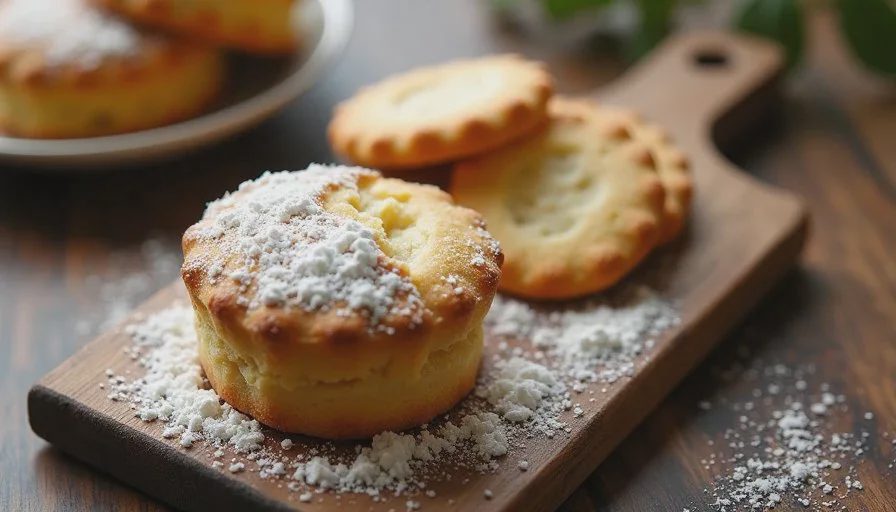
A simple quick bread can be made by treating the egg as the primary binder and using butter for tenderness. The texture will be closer to a scone or a dense tea bread than to a light, cake-like loaf, but it is still satisfying.
Mix one cup of flour with a teaspoon of baking powder, a pinch of salt, and two tablespoons of sugar. Cut in two to three tablespoons of cold butter. Beat the egg with a few tablespoons of milk or water and stir the liquid into the dry ingredients until a soft dough forms. Additional liquid can be added sparingly if needed.
Press the dough into a small greased loaf pan or shape it into a free-form oval on a baking sheet. Bake at 375°F until the top is golden and a skewer inserted in the center comes out clean, usually 20 to 30 minutes. Cool before slicing.
The bread is best the day it is made. It can be toasted the next day if any remains. The method is flexible: a handful of dried fruit, a sprinkle of seeds, or a little cheese can be added if they are available, but none are required. The core of flour, butter, and egg is enough.
Practical Notes on Measuring and Method
When ingredients are limited, precise measuring becomes more important than usual. Too much flour relative to the fat and egg produces dry, tough results. Too little flour leaves the dough or batter sticky and unstructured. Using a consistent measuring method—spooning flour into the cup and leveling, or weighing if a scale is available—keeps the ratios in a workable range.
Temperature matters as well. Cold butter is better for biscuits and shortbread; softened or melted butter is easier for cakes. The egg can be used straight from the refrigerator in most of these preparations, though a few minutes on the counter makes it incorporate more smoothly.
Mixing should stay minimal. Once the flour is added, stir only until the ingredients are combined. Additional mixing develops gluten and pushes the texture toward toughness, especially when the total quantity of fat and liquid is modest.
Oven temperature and timing need attention because small batches bake faster than larger ones. Checking a few minutes earlier than expected prevents over-baking, which is particularly noticeable when the recipe is already lean.
What These Bakes Deliver and What They Do Not
Bakes made with only flour, butter, and one egg will not have the lightness of a sponge cake or the open crumb of an enriched yeast bread. They will be denser, more straightforward, and more dependent on the quality of the butter for flavor. Within those limits they can still be tender, well-seasoned, and satisfying.
The advantage is reliability. These preparations do not require a well-stocked refrigerator or a special shopping trip. They use what is already present and turn it into something that feels intentional rather than improvised. On days when the pantry is limited, that reliability is more useful than complexity.
The same core ingredients can also serve as the starting point for slightly more elaborate baking if additional items become available. A little milk improves the cake and biscuits. A spoonful of sugar makes the cookies more distinct. A pinch of spice or a splash of vanilla adds dimension. The minimal versions remain available when those extras are not.
Choosing According to the Moment
The choice among these options depends on what is wanted and how much time is available.
Biscuits are the fastest and most savory-leaning.
The small cake is the most dessert-like and benefits from being eaten warm.
Shortbread-style cookies keep the longest and require the least attention once they are in the oven.
The quick bread sits between biscuit and cake and works well for breakfast or an afternoon slice.
All four stay within the constraint of flour, butter, and one egg. All four can be scaled to a small household so that the finished baking is finished while it is still good. None of them require special skill beyond careful measuring and a light hand with the dough or batter.
When the pantry is reduced to the basics, these preparations keep baking possible. They do not pretend to be more than they are. They simply turn three ordinary ingredients into something warm, structured, and worth sitting down for. That is enough for most ordinary days.
Small batch, real life, something worth sharing.


No notes yet — write the first one.