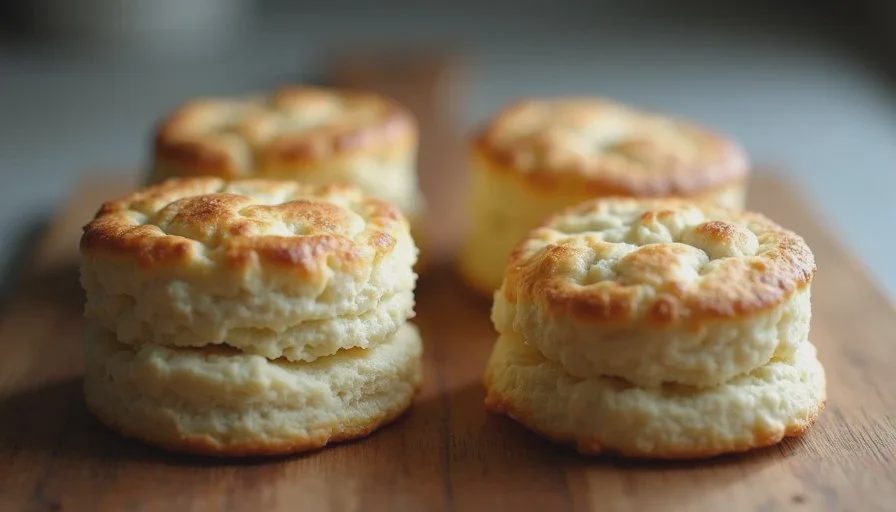
Tough biscuits are usually the result of too much gluten development, too much flour, or overworking the dough. The exterior may look acceptable, yet the interior feels dense, chewy, or bread-like instead of tender and short. Many bakers respond by changing brands of flour or adding more fat, but the more reliable fixes are often simpler and more mechanical.
I ran a series of side-by-side tests in my own kitchen using the same basic biscuit formula, the same flour, and the same oven. The goal was to isolate four common recommendations and see which ones produced a noticeably more tender crumb under ordinary home conditions. The tests were not laboratory trials. They were practical bakes done with the tools and ingredients most home bakers already have. The results were clear enough to guide everyday baking.
The four approaches I tested were: handling the dough as little as possible, using a higher ratio of fat, incorporating a small amount of acidity, and controlling the flour measurement more carefully. Each method was applied to an otherwise identical batch so the differences could be attributed to the variable being tested.
The Baseline Recipe and Method
All tests began from the same starting point: a straightforward biscuit dough made with all-purpose flour, cold butter, buttermilk, baking powder, baking soda, and salt. The fat was cut into the flour until the mixture resembled coarse crumbs with some pea-sized pieces remaining. Buttermilk was added and stirred just until the dough came together. The dough was turned out, patted to thickness, cut, and baked at high heat.
This baseline reliably produced biscuits that were acceptable but could tip into toughness if the dough was handled longer, if the flour was packed, or if the liquid was slightly off. It therefore served as a useful control. Each variation changed only one element so the effect could be observed directly.
The biscuits were evaluated for height, exterior color, interior texture, and how they felt when bitten or torn. Notes were taken while the biscuits were still warm and again after they had cooled to room temperature. Toughness is often more apparent after cooling, when the crumb has fully set.
Method 1: Minimal Handling
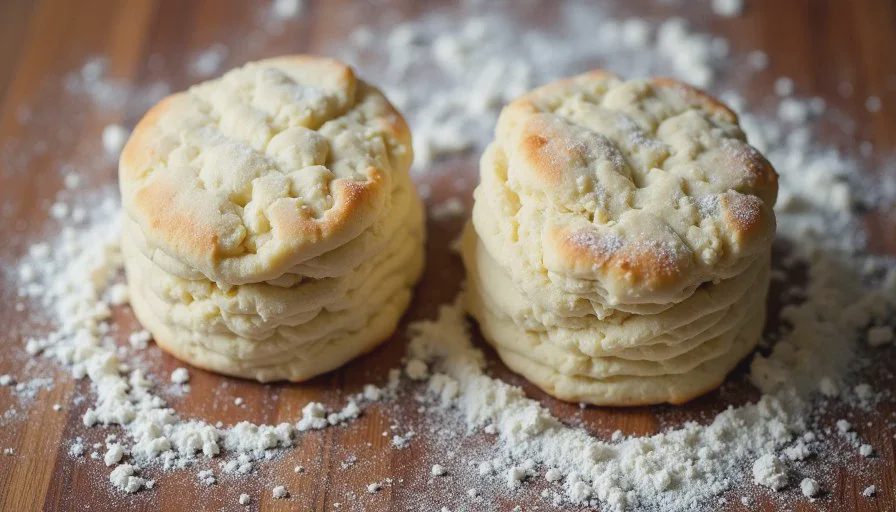
The first and most frequently repeated advice for tender biscuits is to handle the dough as little as possible. Gluten develops with mixing and kneading. The more the dough is worked, the stronger and chewier the final crumb becomes.
In the test I prepared two batches side by side. In the first I mixed the dough until it just came together, turned it out, and patted it into shape with only a few folds to create layers. In the second I kneaded the dough for an additional minute or two after it came together, then rolled it more firmly.
The difference was immediately visible. The lightly handled biscuits rose higher, showed more distinct layers, and felt tender when pulled apart. The more worked biscuits rose less, felt denser, and required more chewing. The exterior of both looked similar; the distinction was entirely in the crumb.
This result matched what the science predicts. At the small scale of a home batch the effect of extra handling is easy to feel and easy to see. The practical takeaway is straightforward: stop mixing as soon as the dry flour disappears, and shape the dough with a light touch. Additional kneading does not improve biscuits the way it improves yeast bread.
Of the four methods tested, minimal handling produced one of the most consistent improvements with the least change to the recipe itself.
Method 2: Higher Fat Ratio
The second approach increased the amount of butter relative to the flour. Fat coats flour proteins and limits gluten formation. More fat should therefore produce a more tender crumb.
I kept the flour and liquid the same and increased the butter by about 25 percent. The fat was still cut in while cold, and the rest of the method remained unchanged.
The higher-fat biscuits were noticeably richer and more tender. They spread slightly more and browned a bit faster at the edges. The crumb felt shorter and less resistant when bitten. The improvement was clear, yet it came with trade-offs. The biscuits were more delicate and slightly greasier on the fingers. They also lost a little of the clean, straightforward flavor of a lower-fat biscuit.
This method works when richness is welcome and a more fragile texture is acceptable. It is less useful if the goal is a classic, sturdy biscuit that can be split and filled without crumbling. In everyday baking I now treat the higher fat ratio as an optional variation rather than a default fix.
Method 3: Adding a Touch of Acidity
The third test introduced a small amount of additional acidity. Buttermilk already contributes acid, which reacts with baking soda and also has a mild tenderizing effect on gluten. I wondered whether a little extra acid— in the form of a teaspoon of lemon juice or vinegar added to the buttermilk—would further improve tenderness.
The batch with extra acid rose well and had a slightly softer crumb than the baseline. The difference was real but modest. The flavor remained pleasant; the small amount of additional acid did not make the biscuits taste sour. The texture improvement was less dramatic than the change produced by minimal handling or by increasing the fat.
Acidity appears to help, yet within the range of a normal buttermilk biscuit the effect is secondary to how the dough is handled and how much fat is present. I would not rely on extra acid alone to fix toughness, but I also would not hesitate to use it if the buttermilk is mild or if a little insurance is wanted.
Method 4: Precise Flour Measurement
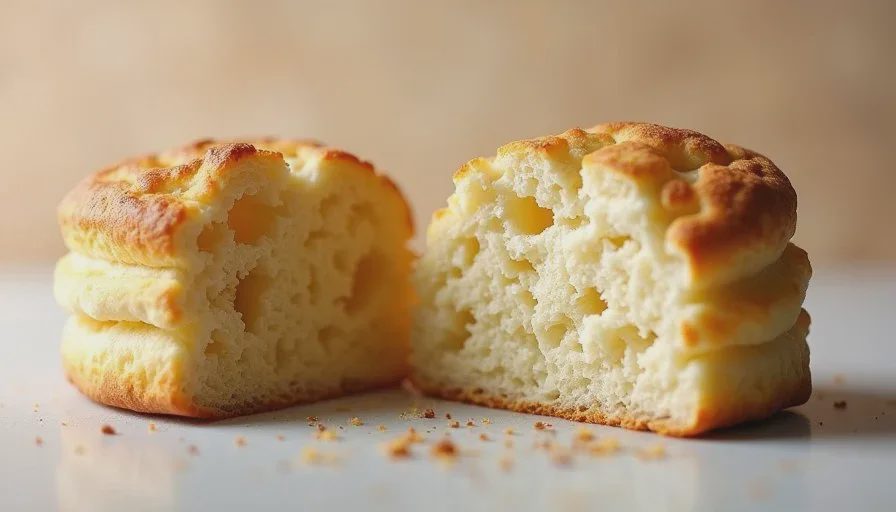
The fourth test focused on how the flour was measured. Scooping flour directly from the bag packs more flour into the cup than spooning it in and leveling. The extra flour makes the dough drier and encourages more gluten development as the baker works to bring it together.
I prepared one batch using the scoop-and-level method and another using the spoon-and-level method (or weight, when a scale was available). The rest of the formula and handling stayed the same.
The difference was significant. The scoop-measured biscuits were taller in some cases but noticeably tougher and drier. The spoon-measured or weighed biscuits were more tender and had a more even, softer crumb. The dough itself felt different from the start: the accurately measured version came together more easily and required less working.
This result confirmed what many bakers eventually learn by experience. Flour measurement is one of the largest sources of variability in biscuit texture. When the dough feels dry and shaggy and needs extra liquid or extra kneading to come together, the flour was probably packed. Starting with a lighter, more accurate measure prevents the problem before mixing begins.
Of the four methods, careful flour measurement and minimal handling gave the most reliable improvement with the least change to the intended character of the biscuit.
What the Tests Showed Overall
When the four approaches were compared, two stood out as the most effective everyday fixes: handling the dough lightly and measuring the flour carefully. Increasing the fat improved tenderness but changed the style of the biscuit. Adding extra acid produced a smaller, secondary benefit.
The combination of accurate flour measurement and minimal handling produced the most tender results while keeping the biscuits recognizable as classic buttermilk biscuits. The higher-fat version was excellent when a richer, more delicate biscuit was wanted. The acid addition was useful insurance but not transformative on its own.
These outcomes held across a few repeated bakes. The differences were not dependent on a single lucky tray. They appeared consistently enough to guide routine practice.
Practical Recommendations from the Tests
For everyday biscuits that stay tender:
Measure flour by spooning it into the cup and leveling, or by weight if a scale is available.
Cut the cold fat into the flour until the mixture is coarse and irregular.
Add the liquid and stir only until the dough comes together.
Turn the dough out and pat or fold it lightly; avoid kneading.
Cut straight down without twisting the cutter.
Bake in a hot oven so the biscuits rise quickly before the structure sets.
If a richer biscuit is preferred, increase the butter modestly and accept a more delicate crumb.
If the buttermilk is mild or the dough feels tight, a teaspoon of lemon juice or vinegar can be added to the liquid without harming the flavor.
These steps address the most common causes of toughness without requiring special ingredients or equipment. They work at the small scale of a home batch and produce biscuits that are tender when warm and still pleasant after cooling.
Why Toughness Happens Even When the Recipe Is Followed
A recipe can be written correctly and still produce tough biscuits if the flour is packed, the dough is worked past the point of necessity, or the fat is too warm and blends completely into the flour instead of remaining in distinct pieces. The written instructions cannot control every physical variable in a home kitchen. The four tests simply made those variables visible and showed which ones responded most clearly to adjustment.
Tough biscuits are not usually a sign that the baker lacks skill. They are a sign that one or two mechanical factors moved in the wrong direction. Once those factors are recognized, they are straightforward to correct. The next batch becomes more tender not because the baker suddenly acquired new talent, but because the dough was measured and handled with the actual causes of toughness in mind.
The tests confirmed that the simplest interventions—lighter flour measurement and less handling—deliver the largest improvement for ordinary home baking. That is the practical result I now rely on.
Small batch, real life, something worth sharing.


No notes yet — write the first one.