
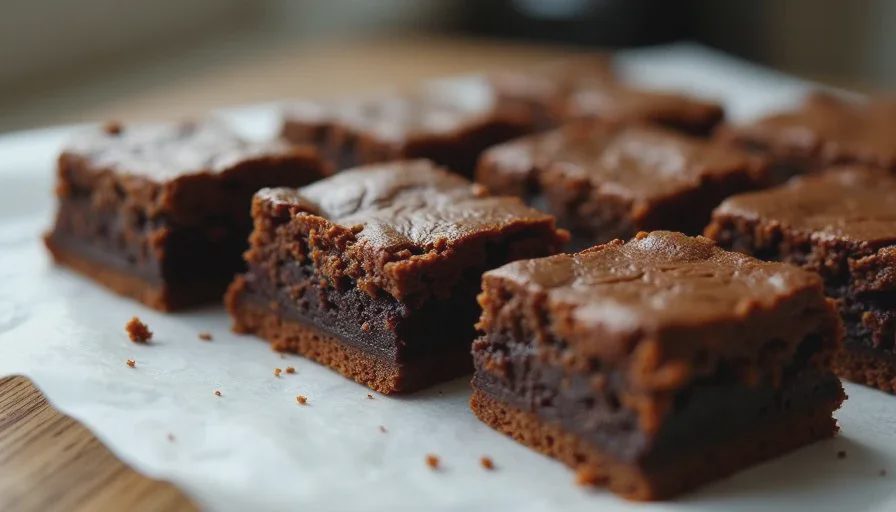
Small-batch brownies solve a common household problem: the desire for a rich, chewy chocolate square without committing to a full 9×13 pan that lingers for days. A modest batch baked in an 8-inch square pan or even a loaf pan yields enough for two generous servings or four smaller ones. The brownies can be finished the same evening or the next day while the center is still chewy and the edges still have a slight crackle.
I began reducing brownie formulas after years of professional baking where large sheets were the norm. At home the same recipes produced more brownies than we would eat while the texture remained ideal. Brownies are at their peak within the first day or two. After that the chewy center firms and the contrast between edge and middle softens. Scaling the recipe keeps the pleasure of a freshly baked brownie without the surplus.
This version prioritizes a chewy rather than cakey texture. The method uses melted butter and a higher ratio of sugar and chocolate to flour, which limits gluten development and encourages the dense, moist center that many people prefer. No mixer is required. The batter comes together in one bowl with a spatula.
What Creates a Chewy Center
Chewy brownies depend on a few controllable factors.
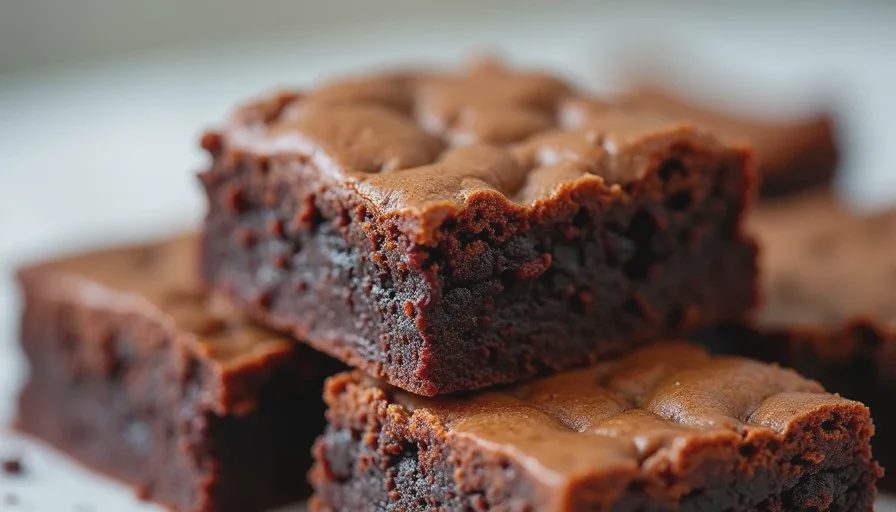
A higher proportion of sugar and fat relative to flour reduces gluten formation and keeps the crumb dense and moist. Cakey brownies usually contain more flour and sometimes additional leavening or creamed butter, which incorporates air and produces a lighter structure. For chewiness the goal is the opposite: minimal air and a batter that sets into a fudgy, cohesive interior.
Melted butter rather than creamed butter helps. Creaming incorporates air that leads toward a cakier result. Melting the butter and stirring it into the sugar creates a glossy, dense base that bakes into a chewier texture.
Chocolate quantity and type matter. Using both cocoa powder and melted chocolate (or a larger amount of chocolate alone) deepens flavor and contributes to the fudgy quality. Cocoa alone can work, but the combination gives a more complex chocolate taste and a denser crumb.
Baking time is critical. Pulling the brownies when the center is just set—still slightly soft under a toothpick or skewer—preserves chewiness. Additional minutes in the oven push the texture toward firm and dry. The edges will be more done than the center; that contrast is part of the appeal.
Cooling also affects the final texture. Brownies continue to set as they cool. Cutting them while they are still warm produces a softer, more fragile square. Waiting until they reach room temperature gives cleaner edges and a more pronounced chewy bite.
These elements work together. The recipe ratios establish the potential for chewiness; the baking and cooling determine whether that potential is realized.
Core Ingredients and Simple Ratios
The ingredient list is short and relies on pantry staples.
Butter provides fat and flavor. Unsalted butter is preferable so the salt level can be controlled, but salted butter works if the added salt is reduced slightly. Melting it simplifies the method and supports the chewy texture.
Sugar—usually a combination of granulated and brown—sweetens and contributes to moisture and chew. Brown sugar adds a slight caramel note and extra moisture. The total sugar amount is relatively high compared with the flour, which is intentional for this style of brownie.
Eggs bind the batter and help create structure without making the brownies cakey. One or two eggs are typical for a small batch; the exact number depends on the other quantities. Room-temperature eggs incorporate more evenly.
Chocolate and cocoa deliver the primary flavor. A combination of unsweetened or bittersweet chocolate and cocoa powder gives depth. If only cocoa is available, the recipe can still work, though the texture may be slightly less fudgy. Chopping the chocolate finely helps it melt smoothly into the butter.
Flour is kept modest. Too much flour tips the brownies toward cakey. All-purpose flour is sufficient. Measuring carefully—preferably by weight—keeps the ratio consistent.
Salt balances the sweetness and sharpens the chocolate flavor. A small amount of vanilla extract rounds out the taste but is not essential if it is not on hand.
These ingredients are ordinary. Their effectiveness comes from the proportions and the mixing method rather than from specialty items.
Mixing Method for a Dense, Chewy Batter
The process is deliberately simple.
Melt the butter and chocolate together in a saucepan over low heat or in a microwave-safe bowl in short bursts, stirring until smooth. Remove from the heat and stir in the sugar until the mixture is glossy and combined. The residual heat helps dissolve the sugar.
Add the eggs one at a time, stirring thoroughly after each addition. The batter will thicken and become cohesive. Stir in the vanilla if using.
Sift or whisk the flour, cocoa (if using), and salt together, then add them to the wet mixture. Stir only until no dry streaks remain. Over-mixing develops gluten and can make the brownies tougher. A few small lumps are preferable to a perfectly smooth but over-worked batter.
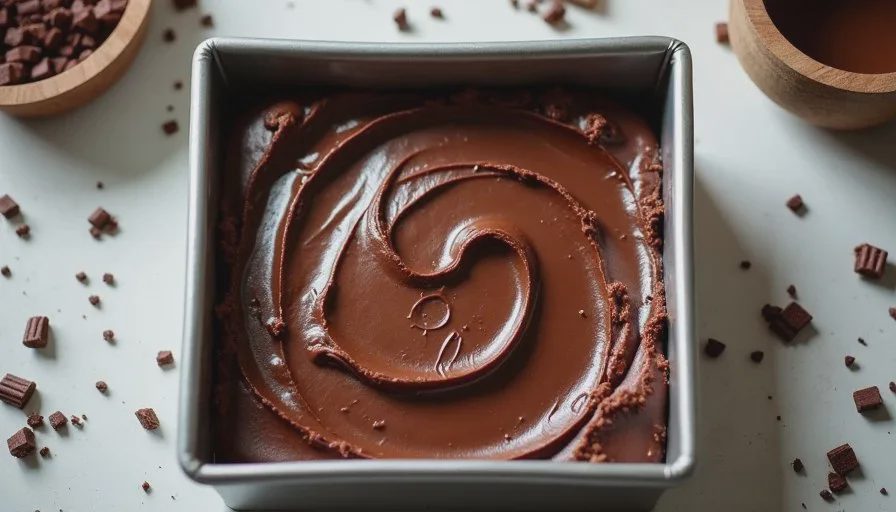
The finished batter will be thick and glossy. It should mound slightly when dropped from a spatula rather than pour like cake batter. If it seems unusually thin, a tablespoon of additional flour can be stirred in. If it seems overly stiff, a teaspoon of warm water or milk can loosen it. These small corrections are easy to make at this scale.
Transfer the batter to a greased and lined 8-inch square pan or a comparable small baking dish. An 8×8 pan is ideal for a small batch; a 9×5 loaf pan also works and produces thicker brownies that may need a few extra minutes. Spread the batter evenly. The surface can be smoothed with a spatula or left slightly uneven for a more rustic top.
Baking for Chewiness
Oven temperature is usually 325°F to 350°F. A moderate temperature allows the brownies to set without drying the edges too quickly. Higher heat can produce a crusty top and over-baked edges while the center lags.
Baking time for a small batch is typically 20 to 30 minutes, depending on the pan and the oven. Begin checking at the early end of the range. The brownies are ready when the top looks set and a toothpick or skewer inserted near the center comes out with moist crumbs rather than wet batter. A clean toothpick usually means the brownies have gone past the ideal point for maximum chew.
The center should still look slightly under-done compared with the edges. Residual heat continues to firm the crumb as the brownies cool. Pulling them at the right moment is the single most important step for a chewy rather than dry result.
If the top is browning too quickly while the center remains wet, tent the pan loosely with foil for the final minutes. If the brownies are not yet set after the expected time, continue baking in short increments and check frequently.
Cooling, Cutting, and Storage
Allow the brownies to cool completely in the pan on a rack. This can take one to two hours. Cutting while warm produces crumbly edges and a softer texture that is pleasant but less clean. Once cool, the brownies can be lifted out by the parchment overhang and cut into squares with a sharp knife. Wiping the knife between cuts keeps the edges neat.
For the chewiest texture, serve the brownies at room temperature the day they are baked. If they must be held, store them in an airtight container at room temperature for up to two days. The texture will firm slightly but remain enjoyable. Refrigeration makes them denser and is best avoided unless the kitchen is very warm. Freezing individual squares, well wrapped, preserves the texture for longer storage; thaw at room temperature.
A small batch means leftovers are limited. Two people can finish the pan over a day or two without the brownies lingering past their best window.
Common Adjustments and Troubleshooting
A few ordinary issues appear with small-batch brownies.
If the brownies turn out cakey rather than chewy, the most likely causes are too much flour, over-mixing, or over-baking. Reducing the flour slightly, stirring only until combined, and pulling the pan when the center is still moist usually correct the texture.
If the center is truly wet and under-set after cooling, the brownies needed more time. An oven that runs cool or a pan that is deeper than expected can produce this result. Additional minutes in the oven, or a slightly higher temperature on the next bake, resolve it.
If the edges are dry while the center is good, the oven may run hot or the pan may be dark. Lowering the temperature by 25°F or using a light-colored pan helps. Tenting with foil partway through baking also protects the edges.
Flavor that seems flat often points to insufficient salt or chocolate that is mild. A pinch more salt or a higher percentage of chocolate corrects it. Cocoa quality varies; a deeper, darker cocoa produces a more intense result.
These adjustments are incremental. Because the batch is small, testing a change costs little time and produces limited leftovers. Notes on exact baking time, pan used, and final texture build a reliable personal reference.
Why the Small Batch Is Worth Making
A full pan of brownies has its place for gatherings or deliberate freezer stocking. For ordinary days the small batch is more useful. The effort is modest—one bowl, a short mixing time, and a brief bake. The result is a concentrated chocolate dessert that can be finished while the chewy center is still at its best. There is no large surplus to manage and no sense that the baking has outlasted the moment it was meant to serve.
The method stays accessible. No stand mixer, no complicated techniques, and no specialty ingredients beyond good chocolate and cocoa are required. The focus remains on the texture that most people want from a brownie: dense, moist, and chewy in the center with a slightly firmer edge. Scaling the recipe simply makes that texture available on a schedule and in a quantity that fits real life.
Small-batch brownies with a chewy center are not a compromise. They are the practical form of a classic dessert when the household is small and the preference is for quality over quantity. The chocolate flavor is deep. The texture is satisfying. The pan is empty before the brownies have a chance to dry out. That is the quiet advantage of baking only as much as will be enjoyed.
Small batch, real life, something worth sharing.




No notes yet — write the first one.